


License Beats for $40–$100: One Page Checklist for Independent Rappers
A “beat” is a rap or hip-hop instrumental that a producer licenses or sells outright to an artist for a release, not a piece of consumer audio gear. Before you pay, the one action that matters is reading the license: confirm the tier, the usage caps, and the warranty language before your money leaves your account. Marketplaces like Tellingbeatzz exist precisely because that clarity, done right, protects the artist and the producer at once.
TL;DR:
- Buyers should verify license tiers include all necessary file formats and confirm usage caps, especially for growing releases to avoid breaches.
- Most industry-standard prices range from $25 to $50 for MP3 leases, $50 to $100 for WAV files, and $100 to $250 for stems or trackouts, with limits typically specified in the contract.
- Purchasing stems or trackouts is recommended only for professional mixes needing detailed control, while WAV files suffice for demos or low-budget singles.
- Exceeding usage caps generally requires upgrading to a higher license tier before large-scale release, preventing takedowns or monetization issues.
- Reselling or sublicensing beats usually violates license terms unless explicitly allowed in the contract, emphasizing the importance of clear permission in writing.
Table of Contents
- The Beats-Buying Checklist: What to Verify Before You Pay
- What Do the Different Beat License Tiers Actually Cover?
- Should You Buy MP3, WAV, or Full Trackouts?
- What Legal Language Actually Protects You in a Beat Deal?
- How Do You Buy and License a Beat the Right Way?
- Can You Resell or Sublicense a Beat You’ve Purchased?
- A Producer’s View on Why License Clarity Matters
- Ready to License Your Next Beat?
- Sources
- FAQ
The Beats-Buying Checklist: What to Verify Before You Pay
Every purchase should survive this checklist before checkout, not after a takedown notice arrives. Think of it as due diligence, the same instinct a songwriter applies to a publishing deal, just compressed into two minutes at a shopping cart.
- Confirm the license tier and exactly which file formats it includes (MP3, WAV, or trackouts).
- Check the streaming, sales, and physical-copy caps, and whether audio streams and video views count toward the same limit or separately.
- Verify territory and platform permissions: does the grant cover streaming, YouTube, TikTok, sync placements, or paid advertising?
- Confirm who controls Content ID registration and who receives monetization if a claim gets filed.
- Look for a warranty of originality and an indemnity clause that protects you from third-party claims.
- Verify delivery matches purchase: stems present if paid for, correct bit depth and sample rate.
- Save the signed license PDF and payment receipt somewhere permanent, not buried in an inbox.
Pro Tip: Screenshot the product page at the moment of purchase. Marketplaces update pricing and terms, and having proof of what you agreed to is worth more than memory if a dispute surfaces later.
Electronic signatures on these agreements are legally binding under the E-SIGN Act, so a typed name or a checkbox at checkout carries real contractual weight. Treat it that way.
What Do the Different Beat License Tiers Actually Cover?
Every tier answers the same underlying question: how much can you do with this instrumental before you need to pay again? The names vary by seller, but the structure is remarkably consistent across the industry.
- MP3 lease: a compressed file with the lowest usage caps, best suited for demos or a first single with modest reach.
- WAV lease ($50 to $100): uncompressed audio with better fidelity and modestly higher caps, a solid baseline for a serious single release.
- Trackout or stem lease ($100 to $250): individual instrument files that give a mix engineer real control, paired with higher usage limits.
- Unlimited non-exclusive lease: removes the numeric caps entirely but the beat remains non-exclusive, meaning the producer can still sell it to other artists.
- Exclusive rights (priced individually): the buyer gets sole commercial control, though you still need to confirm the producer actually holds clean rights to transfer.
These price bands and cap structures are typical across the non-exclusive market, though every contract sets its own numbers, so read the actual document rather than assuming the tier name tells the whole story. Caps are usually counted cumulatively across the song’s life, and some agreements separate audio streams from video views while others pool them together. If your single starts climbing the charts on a lower tier, upgrade before you cross the limit, not after a producer’s team notices and sends a notice of breach.
Should You Buy MP3, WAV, or Full Trackouts?
The format decision comes down to what your engineer needs to do to the instrumental once your vocals are on it. An MP3 works fine for a rough demo you’re sending to a manager. A WAV file is the right call for most independent single releases, since it preserves quality through mixing and mastering without the extra cost of stems.
Trackouts, also called stems, unbundle the beat into individual instrument files, drums, bass, melody, and more, so your engineer can carve out space for the vocal instead of fighting a locked stereo mix. Stems cost more and take longer to deliver, but they earn that cost back on any release where the final mix matters commercially.
Before you accept delivery, check:
- File names are clear and instrument-labeled, not “Track_01,” “Track_02.”
- Bit depth and sample rate match your session (typically 24-bit, 44.1kHz or 48kHz).
- Exports are consolidated and clean, with no stray silence or timing offset between files.
Mismatched sample rates between the producer’s session and yours can introduce timing drift during mixing if nobody normalizes them first. A simple WAV lease is plenty for a demo or a low-budget single. Save the trackout investment for a radio push, a label campaign, or a vinyl pressing where the final mix carries real stakes.
What Legal Language Actually Protects You in a Beat Deal?
A non-exclusive lease is a license to use a sound recording, not a transfer of copyright. The producer still owns the underlying composition and recording, and you’re renting defined rights within defined limits. Understanding that distinction changes how you read every clause that follows.
Four things separate a clean contract from a risky one:
- Warranty and indemnity language. A warranty of originality means the producer confirms the beat is theirs to license. An indemnity clause protects you if a third party later claims the beat sampled or copied their work.
- Term and cap triggers. The contract should spell out exactly what happens when you exceed a cap, whether that’s an automatic upgrade requirement or a breach notice.
- Content ID control. Clarify who registers the composition with YouTube and who collects monetization on claimed uploads. This single point causes more disputes than almost anything else in the beat-leasing space.
- Recordkeeping. Save the signed PDF the moment you receive it. Electronic signatures hold up legally, but only if you can produce the document.
Pro Tip: If a seller can’t answer “what happens if my song goes viral on this tier” in one sentence, that’s a signal to ask more questions before you pay, not after.
Marketplace tier labels like “unlimited” or “exclusive” are shorthand, and the actual grant language inside the PDF is what a court or a rights-management team will read, not the product title on the checkout page.
How Do You Buy and License a Beat the Right Way?
Turn the checklist into a sequence, and buying a beat stops being a gamble.
- Pick your tier based on your actual release plan. A soundcloud freestyle doesn’t need trackouts. A label-backed single might.
- Read and save the license PDF before you record a single verse. Know your caps before you build a song around them.
- Verify delivered files match your purchase. Open the stems, check the WAV specs, confirm nothing’s missing.
- Register your splits with a performance rights organization (ASCAP, BMI, or SESAC) and enter accurate metadata with your distributor.
- Monitor your streams and sales against your cap, and upgrade proactively rather than reactively once a release starts gaining traction.
- Get a contract reviewed by an entertainment attorney for any exclusive deal or major label-backed campaign.
This sequence also protects the value of your future catalog, since messy licensing history follows a song for its entire commercial life.
Can You Resell or Sublicense a Beat You’ve Purchased?
Almost never, unless the contract says so explicitly. A non-exclusive lease grants you the right to use the beat in your own recording, not the right to pass that beat, or your license to it, on to someone else. If you sublicense a beat without permission, you’re creating a rights conflict the producer never agreed to, and it can void your license entirely.
Exclusive rights change the calculus, but only partially. Buying exclusive rights typically gives you sole commercial control over that instrumental, meaning the producer stops selling it to anyone else going forward. It does not automatically hand you the right to resell the beat itself as a standalone product to a third party. That right has to be written into the agreement in plain language, because rights transfer depends entirely on what the producer actually holds and is willing to convey. A producer who only holds partial rights to samples used in the beat cannot legally grant you full resale rights, no matter what tier name is on the invoice.
If your business plan involves flipping beats, whether reselling a lease to another artist or sublicensing stems to a collaborator, get that permission in writing before any money changes hands. Verbal assurances from a producer mean nothing once a dispute lands in front of a rights organization or a court. Ask directly: “Does this license permit resale or sublicensing, and if so, under what conditions?” A seller with a clean, professionally drafted agreement will have a direct answer. One who hesitates or gives a vague response is telling you something important about how carefully that contract was built.

A Producer’s View on Why License Clarity Matters

Selling beats for years teaches you that most disputes trace back to one root cause: a contract that was vague where it needed to be specific. Artists don’t get hurt by high prices. They get hurt by caps they didn’t know existed, or a Content ID claim nobody warned them about.
That’s why Tellingbeatzz builds MP3, WAV, Trackout, and Exclusive options with clear, defined grants instead of ambiguous marketing language. A license should answer every question in this article before an artist ever has to ask it. Clear terms protect the producer’s catalog just as much as they protect the artist’s release, and that alignment of interest is what a healthy licensing relationship looks like.
— Thomas
Ready to License Your Next Beat?
Tellingbeatzz gives independent artists something most producer catalogs don’t: transparent tiers with unlimited commercial rights and instant delivery, so you know exactly what you’re getting before you check out. MP3 Unlimited runs $40 one time and covers compressed files with unlimited commercial use, while WAV Unlimited at $60 delivers uncompressed audio for cleaner mixes.
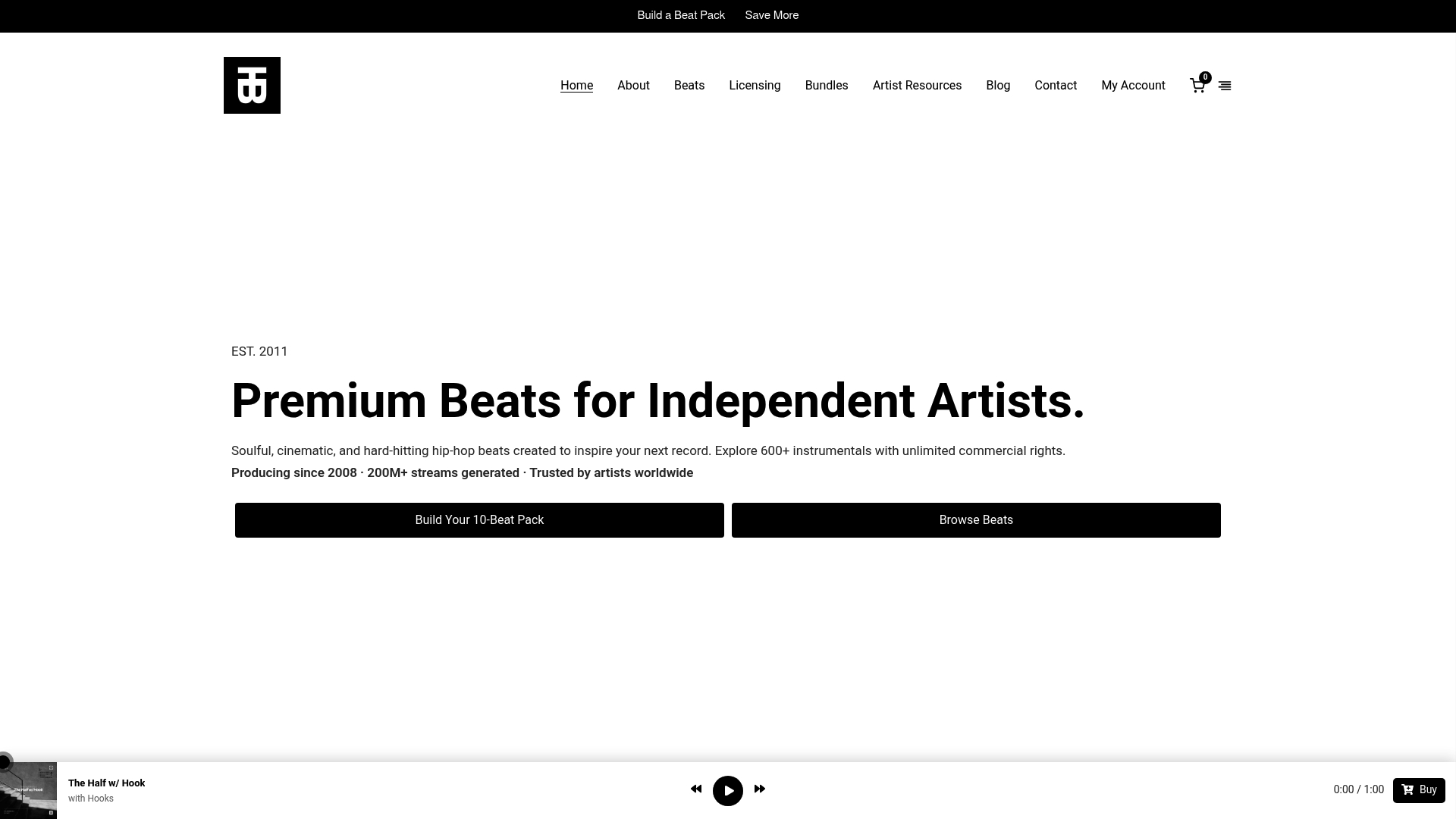
Artists who need full mixing control can step up to Trackout Unlimited at $100, which unlocks stems for a real engineer-grade session, and Exclusive Rights are available with pricing on request for artists who want sole ownership of a beat. If you’re planning multiple releases this year, the membership plans offer the same MP3, WAV, and Trackout access on a recurring monthly basis, which tends to work out cheaper than buying one-off licenses beat by beat. Browse the full catalog of over 600 original instrumentals on the Tellingbeatzz homepage and find the sound that fits your next single.
This article is general information, not a substitute for advice from a qualified lawyer. Consult a qualified legal professional about your own circumstances before acting on anything here.
Sources
- Non-Exclusive Beat License Agreement: Rights & Terms – LegalClarity
- Beat lease agreements guide – Chase Lawyers / EntertainmentLawyerMiami
- Do you need beat stems or trackouts for mixing? — Sendai Studios
- How to export individual tracks in Pro Tools (track outs) — Avid
FAQ
What Is the Difference Between a Beat Lease and Exclusive Rights?
A lease is a non-exclusive license, meaning the producer can sell the same instrumental to other artists while you use it under defined caps. Exclusive rights give you sole commercial control of the beat, though you should always confirm the producer actually holds clean rights to transfer before paying.
How Much Do Beat Licenses Typically Cost?
MP3 leases run roughly $25 to $50, WAV leases $50 to $100, and trackout or stem leases $100 to $250, based on common industry pricing tiers. Tellingbeatzz prices its MP3 Unlimited at $40, WAV Unlimited at $60, and Trackout Unlimited at $100, each with unlimited commercial rights included.
Do I Need Stems or Trackouts for My Release?
Stems matter most when a mix engineer needs to rebuild the instrumental around your vocal for a professional release, like a label campaign or vinyl pressing. For a demo or a low-budget single, a standard WAV file usually delivers enough quality without the added cost.
What Happens if I Exceed My License’s Usage Cap?
Most agreements require you to upgrade to a higher tier once you cross the stream, sale, or distribution limit stated in the contract. Monitoring your numbers and upgrading proactively avoids the takedown notices and monetization disputes that come from ignoring a cap until it’s already broken.
Can I Resell a Beat License to Another Artist?
Generally, no. A standard non-exclusive lease only grants you personal use rights in your own recording, not the right to transfer or resell that license to someone else, unless the contract explicitly states otherwise in writing.

No Comments