


Indie Artists: Upgrade Beat Licenses, Pay the Difference, 5 Checks
Yes, in most cases you can upgrade a beat license. You typically pay only the difference between your current tier and the new one, then receive expanded usage rights and additional files. The exception is a beat already sold under an exclusive agreement, or one carrying an uncleared sample the producer never secured, since an upgrade won’t erase either of those problems.
TL;DR:
- Upgrading a beat license generally involves paying only the difference between current and higher tiers, except for exclusive or uncleared sample beats, where upgrade cannot fix legal issues.
- Moving up license tiers extends distribution limits, unlocks monetized video use, and may include additional files such as WAV stems and full trackouts, but does not automatically clear samples or change underlying rights.
- The upgrade process is straightforward: gather order details, verify beat status, request the upgrade in writing, pay the difference, and archive the new license and files carefully.
- Upgrade costs vary, with entry to premium typically in the low double digits, and premium to unlimited in the low hundreds; exclusive rights often require direct negotiation.
- Upgrades expand beat rights but do not automatically cover underlying composition or sample clearances, and artists must register with performance and mechanical licensing agencies to collect royalties.
Table of Contents
- What License Upgrades Actually Change
- How to Request and Complete a License Upgrade
- How Much Does Upgrading a Beat License Cost?
- What Upgrades Don’t Cover: The Legal Checklist
- Pre-Upgrade Checklist: Confirm These Five Things
- What We’ve Learned Handling Upgrades at TellingBeatzz
- Upgrade Your License Directly Through TellingBeatzz
- Where to Verify the Legal Details
- Sources
- FAQ
What License Upgrades Actually Change
An upgrade rewrites the boundaries of what you’re allowed to do with a beat, and those boundaries usually move in four directions: how many copies you can sell or stream, what file formats land in your inbox, whether monetized video use is permitted, and whether the producer retains any ongoing stake in the track.
A basic lease often caps distribution at a set number of units or streams and expires after a fixed window. Move up a tier, and that cap typically climbs or disappears entirely, monetized YouTube plays become fair game, and you gain access to higher quality files.
Here’s what typically shifts as you move up the ladder:
- Entry lease to premium: higher sales and stream caps, sometimes the removal of an expiration date
- Premium to unlimited: no distribution ceiling, monetized video use, and often the addition of separate WAV stems or full trackouts
- Unlimited to exclusive: the producer stops selling the beat to anyone else, and you gain full ownership of usage rights for that instrumental
Understanding artistry means understanding these tiers are contract language, not marketing labels. The Copyright Office’s own guidance for musicians warns that terms like “premium” or “unlimited” aren’t standardized across beat stores, so the word “unlimited” on one site might still exclude sync licensing or trackout stems. Read the actual license document, not just the tier name, before you assume you know what you’re buying.
How to Request and Complete a License Upgrade
The process is more administrative than legal, and most producers have handled it dozens of times. Here’s the sequence that works on nearly any beat store:
- Gather your order details. Pull up the original receipt, the email address used at checkout, and the beat’s title or catalog number.
- Check the beat’s current status. Visit the producer’s store page for that track and confirm it isn’t marked sold or exclusive already.
- Submit the upgrade request. Use the store’s upgrade form if one exists, or email the producer directly and ask for an invoice covering the price difference to your desired tier.
- Pay the difference and collect your files. Once payment clears, you should receive an updated license PDF along with any new deliverables, like WAV files or trackouts.
- Archive everything. Save the new license and update your project metadata so the paperwork is easy to find if a royalty question comes up later.
If the beat shows as sold, don’t assume the conversation is over. Ask the producer directly whether the exclusive buyer might license it back to others, and request written confirmation either way so you have a paper trail.
Pro Tip: Always request the upgrade invoice in writing, even over email. If a royalty dispute or sample question surfaces months later, that paper trail is the only proof you have of what you actually purchased.
How Much Does Upgrading a Beat License Cost?
Most beat stores charge only the gap between your current tier and the new one, not the full price of the higher license. If you paid $30 for a basic lease and the unlimited tier normally runs a higher price, expect an upgrade invoice closer to the difference rather than paying the full new tier price. That structure rewards artists who license early rather than waiting until a song blows up.
Price gaps vary by producer and catalog quality, but independent artists should generally expect:
- Entry to premium upgrades running in the smaller two figure range
- Premium to unlimited jumps landing somewhere in the mid double digits to low hundreds
- Unlimited to exclusive conversions priced individually, often requiring a direct conversation rather than a fixed invoice
If a record takes off unexpectedly, the math changes. Producers are well within their rights to renegotiate once a track starts generating real revenue, and the Copyright Office has documented cases like “Old Town Road” where licensing terms were renegotiated after a song’s breakout success. Approach that conversation with fair compensation on the table. It protects your relationship with the producer and your long-term catalog.
What Upgrades Don’t Cover: The Legal Checklist
A license upgrade expands usage rights for the beat itself, but it doesn’t automatically touch every layer of rights sitting underneath a finished song. The U.S. Copyright Office draws a sharp line between two distinct copyrighted works: the musical composition and the sound recording, and each can require its own license depending on how you plan to use the track.
A beat license typically governs the master, the actual recorded instrumental. If you’re placing that song in a commercial, film, or ad campaign, you likely need a separate sync license covering the composition itself. One doesn’t substitute for the other.
Sample clearance is the second trap. Upgrading a license does not retroactively clear a sample the producer never licensed in the first place. If your beat contains a recognizable interpolation or loop, ask the producer for documentation proving the sample was cleared before you invest in a higher tier.
Registration rounds out the checklist. Once you’ve upgraded and released the track, register with a performing rights organization to collect performance royalties, since ASCAP notes there’s no single license structure covering every use case, and working through an established PRO cuts down on the paperwork you’d otherwise handle alone. For mechanical royalties on streaming platforms, registering with the Mechanical Licensing Collective ensures you’re identified and paid.

Pre-Upgrade Checklist: Confirm These Five Things
Before you send payment for any upgrade, run through this list. It takes five minutes and can save weeks of frustration later.
- Status check: confirm the beat isn’t already marked sold or exclusive on the producer’s page
- Scope check: get explicit written confirmation of which uses the new tier covers, including video, sync, and unlimited streaming
- Royalty check: ask directly whether the producer retains any points or royalty share, since some agreements preserve a producer’s cut even after an upgrade
- Sample check: request documentation that any samples in the beat have been cleared, especially if you plan commercial release
- Paperwork check: save the new license PDF immediately and update your project metadata so it’s easy to reference
Pro Tip: Screenshot the beat’s product page showing its status before you contact the producer. If a dispute ever arises, you’ll have a timestamp proving what the listing said when you reached out.
What We’ve Learned Handling Upgrades at TellingBeatzz
The upgrade requests that stall almost always trace back to two things: the beat sold exclusively before the artist reached out, or an uncleared sample the producer never disclosed. A short, specific request avoids most delays. Include your order number, the beat title, and the exact tier you want. Clarity gets you a faster answer than a long explanation of your project.
— Thomas
Upgrade Your License Directly Through TellingBeatzz
Skip the back and forth email chains. TellingBeatzz built its licensing page around the exact tiers artists actually need: MP3 Unlimited at $40, WAV Unlimited at $60, Trackout Unlimited at $100, and Exclusive Rights available on request once a beat qualifies for full ownership transfer.
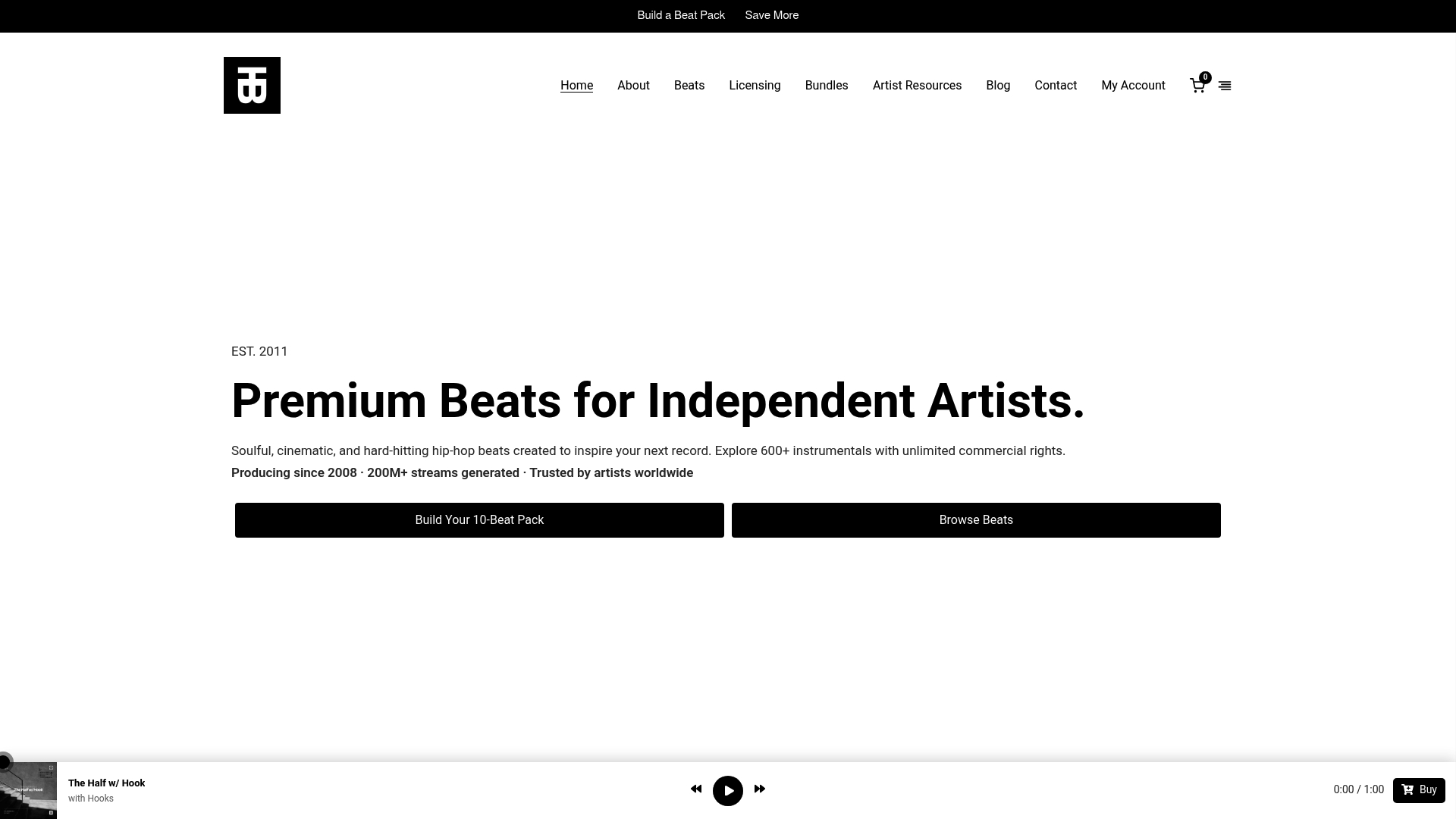
Every beat in the catalog is licensed with unlimited rights baked in from the entry tier up. When you’re ready to move from a basic lease to trackout stems or full exclusivity, submit your order number and the beat’s title through the licensing page, and you’ll get an invoice for the price difference. With a large catalog of instrumentals available and bulk deal pricing offered, upgrading here means one straightforward transaction instead of a drawn out negotiation. Head to the licensing page now and pick the tier that matches where your project is headed.
Where to Verify the Legal Details
For anything touching sample clearance, sync rights, or royalty collection, go straight to the source. The Copyright Office’s guide for musicians and ASCAP’s licensing overview cover the fundamentals every independent artist should know.
This article is general information, not a substitute for advice from a qualified lawyer. Consult a qualified legal professional about your own circumstances before acting on anything here.
Sources
- Sampling, interpolations, beat stores and more: An introduction for musicians
- ASCAP Keeps You in Tune With the Copyright Law
FAQ
What Is an Unlimited License for Beats?
An unlimited license typically removes the sales or stream caps found on entry level leases and often includes monetized video use. The exact permissions still depend on the contract language, so confirm whether trackouts, sync rights, or exclusivity are included before assuming “unlimited” covers everything you need.
What Does It Mean to Upgrade a License?
Upgrading means moving from your current usage tier to a broader one, typically by paying the price difference rather than the full new tier price. You receive an updated license document and any new files, like WAV or trackout stems, that come with the higher tier.
How Can I License My Beats?
If you’re a producer, you license your own beats by defining clear usage tiers, such as MP3, WAV, trackout, and exclusive rights, and publishing those terms on a store page like TellingBeatzz’s licensing page. Clear tier definitions make future upgrades simple for the artists buying from you.
What Happens if I Use a Beat I Didn’t Pay For?
Using a beat without a valid license or exceeding the terms of the one you purchased can expose you to a copyright infringement claim, since the producer retains exclusive rights until they’re properly licensed away. Always confirm your license covers your intended use, including monetized platforms, before releasing a track built on that beat.

No Comments