


3 Contract Checks to Monetize a Leased Beat in the U.S.
Yes, you can monetize a song made with a leased beat, but only when your license explicitly grants commercial-use rights. Before you upload anything, check three things: the commercial-use clause in your contract, any revenue or streaming caps written into that clause, and whether the producer has reserved the right to sell exclusive rights to someone else later. Save your license file and receipt immediately. Once you’ve confirmed those three items, the path to registration and royalty collection is straightforward.
TL;DR:
- You can monetize a song made with a leased beat only if your license explicitly grants commercial-use rights without revenue or streaming caps.
- Non-exclusive leases often include limits on streams, units sold, or territorial restrictions, which require upgrading the license once exceeded for continued legal profit.
- Content ID claims on YouTube and fingerprinting on social media platforms can target leased beats if the producer’s rights are misrepresented as exclusive, risking account penalties.
- Artists generally own the master rights of their recordings, but the producer retains the underlying composition rights unless an exclusive license transfers them.
- Proper registration with the U.S. Copyright Office, The MLC, and a Performance Rights Organization is essential to collecting all applicable royalties and protecting ownership.
Table of Contents
- What Is a Leased Beat, and What Do the License Tiers Actually Cover?
- Does Your License Actually Permit Commercial Use?
- How Do Streaming Platforms and YouTube Handle Leased Beats?
- Who Owns What: Master Rights, Composition Rights, and Royalty Registration
- Common Lease Restrictions and How to Negotiate Around Them
- Your Step-by-Step Path From License to Royalty Payment
- Licensing Ladder in Practice: Mapping Rights to Real Product Names
- A Pragmatic Take on Leasing Versus Buying Exclusive
- Where to Start Licensing With Confidence
- Sources
- FAQ
What Is a Leased Beat, and What Do the License Tiers Actually Cover?
A leased beat is an instrumental a producer licenses to multiple artists at once, rather than selling it outright to a single buyer. The producer keeps ownership of the underlying composition and sound recording; you receive permission to record over it and distribute your song under specific terms. This is fundamentally different from exclusive rights, where the producer transfers full ownership (or at least removes the beat from sale to anyone else) and typically stops licensing that instrumental to other artists.
Most producers structure their catalog as a licensing ladder, with each tier unlocking more usable audio and more flexibility:
- MP3 lease: The most accessible tier, usually delivered as a compressed audio file, suited for quick releases and social content.
- WAV lease: Higher audio fidelity for streaming platforms and mixing engineers who need a cleaner master.
- Trackout (stems) lease: Individual instrument and drum layers, giving you or your mixer full control over the final sound. This tier matters if you’re releasing on DSPs where mix quality affects listener retention.
- Exclusive rights: Full or near-full ownership transfer, often removing the beat from the producer’s public catalog entirely.
Producers price this ladder deliberately. Entry-level leases often run in the $20 to $50 range, premium leases with stems climb toward $50 to $300, and exclusives frequently land between $500 and $2,000 or more, according to industry licensing pricing overviews. The same beat can generate revenue for a producer many times over before it’s ever sold exclusively, which is exactly why reading your specific tier’s terms matters more than assuming all leases work the same way.
Does Your License Actually Permit Commercial Use?
The single word that matters most in a beat license is “commercial.” A lease that grants “personal use only” or omits commercial language entirely does not authorize you to monetize the song, no matter how good it sounds. Look for phrases like “commercial use permitted,” “may distribute for profit,” or “monetize on all platforms.” Vague wording, or the total absence of a use clause, is a warning sign, not a technicality you can safely ignore.
Revenue and streaming caps are the second thing to hunt down. Many non-exclusive leases limit you to a set number of streams, a fixed number of physical or digital copies sold, or a specific revenue ceiling before you’re required to upgrade to a pricier tier. A cap might read “up to 10,000 streams” or “up to 2,500 units distributed.” Once you cross that line, technically you’re in breach of the license even if the platform never notices.
Watch for these red flags before you sign or download:
- No explicit mention of streaming platforms, YouTube, or sync licensing (film, TV, ads).
- Ambiguous language around “distribution” that doesn’t define digital versus physical formats.
- Missing territory language, leaving it unclear whether the license covers worldwide release.
- No stated cap, which can mean either unlimited use or an oversight that will get disputed later.
Permissive wording looks like this: “Licensee may distribute, perform, and monetize the recorded song on all digital platforms worldwide, including but not limited to streaming services, YouTube, and social media.” That single sentence covers commercial use, distribution, territory, and platform scope in one clause.
Pro Tip: Screenshot or PDF the license terms at the moment of purchase. Producers sometimes update their standard terms, and having the exact language you agreed to protects you if a dispute arises months later.
How Do Streaming Platforms and YouTube Handle Leased Beats?
Platforms treat non-exclusive licenses very differently than exclusive ones, and this is where most avoidable mistakes happen.
YouTube’s Content ID system is built for exclusive rights holders. If you or your producer try to submit a leased beat’s reference audio to Content ID, the claim will typically fail eligibility review because Content ID requires exclusive rights in the territories being claimed. Producers who lease the same beat to dozens of artists cannot legitimately claim exclusivity through Content ID, and attempting it risks a disabled reference file or account penalties. YouTube’s own guidance is explicit that claiming content without sufficient rights can lead to terminated partner access for repeat offenders.
Streaming platforms like Spotify and Apple Music don’t run their own Content ID equivalent for uploads, but they rely heavily on the metadata your distributor submits, including songwriter and publishing information. Incorrect or missing metadata is one of the most common reasons royalties go uncollected, not platform malice.
Social platforms including TikTok and Instagram run their own audio fingerprinting systems. Even a 15-second clip of a song built on a leased beat can trigger a claim if the producer’s reference audio matches, particularly on platforms where fingerprinting is aggressive across short-form content. This catches artists off guard because they assume short clips fly under the radar.

Who Owns What: Master Rights, Composition Rights, and Royalty Registration
Copyright law splits every recorded song into two separate works: the sound recording (the master) and the musical composition (the underlying song, including melody and lyrics). When you record vocals over a leased beat, you generally own the copyright in the new sound recording you created, but you don’t own the underlying instrumental unless your license grants exclusivity or a rights transfer. The producer retains the composition rights to the beat itself.
This split is exactly why two separate royalty streams exist, and why so many independent artists leave money on the table.
Mechanical royalties and public performance royalties are not the same thing, and collecting one does not mean you’re collecting the other. Songwriters who register with only one organization are routinely missing half of what they’re owed.
Mechanical royalties come from reproductions and distributions of your composition, primarily streams and downloads. In the United States, The Mechanical Licensing Collective handles this collection for digital audio services, and self-administered songwriters need to register directly to receive payment. The MLC has enrolled more than 85,000 members and distributed over $4 billion in streaming royalties since it began operating under the Music Modernization Act, making registration there a genuinely material step, not paperwork for its own sake.
Public performance royalties come from radio play, live performance, and certain streaming plays, and they’re collected by a Performing Rights Organization, or PRO. The three major U.S. PROs are ASCAP, BMI, and SESAC, and you can only affiliate with one at a time as a songwriter. Register with a PRO as soon as you release music commercially, because mechanical and performance royalties are handled by entirely separate organizations, and missing either registration means forfeiting real income.
- The MLC: mechanical royalties from streams and downloads.
- ASCAP, BMI, or SESAC: performance royalties from radio, live shows, and qualifying streams.
- U.S. Copyright Office: formal registration of your sound recording, which strengthens your legal position if a dispute arises.
Common Lease Restrictions and How to Negotiate Around Them
Before you release anything, run through the restrictions that show up most often in beat leases and decide which ones you can live with.
- Revenue or streaming caps. Most non-exclusive leases set a ceiling, often between a few thousand and tens of thousands of streams or units sold before requiring an upgrade.
- Territory limits. Some leases restrict distribution to specific countries, which matters if you’re planning international release or licensing sync deals abroad.
- Sample clearance gaps. If the beat itself contains an uncleared sample, that liability can extend to your song, regardless of what your lease says.
- Later-exclusive triggers. A producer can sell exclusive rights to someone else after leasing to you non-exclusively, unless your contract states otherwise, potentially forcing you to pull or relicense your song.
Red flags worth walking away from include ambiguous distribution language that never mentions streaming platforms by name, and producers who claim Content ID rights on beats they’ve leased non-exclusively to multiple artists, a practice that violates YouTube’s own exclusivity requirement.
When negotiating, ask directly for a higher revenue cap if you expect strong performance, request that any exclusivity option carry a time limit so a producer can’t pull the beat indefinitely, and get explicit sync licensing language in writing if you plan to pitch your song for film, TV, or advertising placement.
Pro Tip: Get every negotiated change in writing, even a simple email confirmation. Verbal agreements about caps or territory don’t hold up if a dispute reaches a legal review.
Your Step-by-Step Path From License to Royalty Payment
Follow this order, and you’ll avoid the two most common mistakes independent artists make: skipping registration entirely, or registering with only one organization and assuming that covers everything.
- Secure your license and save the invoice. Store the license PDF, receipt, and any email confirmations of negotiated terms in one dedicated folder.
- Register your sound recording with the U.S. Copyright Office. This isn’t required to collect royalties, but it strengthens your legal standing if ownership of your recording is ever challenged, per the Office’s own registration guidance.
- Register your composition shares with The MLC, especially if you wrote lyrics or melody over the beat. Even though you don’t own the instrumental, your lyrical and vocal composition contribution can carry its own registrable share.
- Join a PRO (ASCAP, BMI, or SESAC) and register the song for performance royalty collection.
- Upload through a distributor with accurate metadata, including songwriter splits and publishing information, so DSPs can match usage to the right registrations.
- Monitor for Content ID or platform claims and keep your license readily accessible to dispute any improper claim quickly.
- Upgrade your license tier if the song outperforms its cap. A producer would rather sell you a trackout or exclusive upgrade than have you breach the original terms.
| Step | Organization or Party | What It Protects |
|---|---|---|
| Register recording | U.S. Copyright Office | Your ownership of the specific sound recording |
| Register composition | The MLC | Mechanical royalties from streams and downloads |
| Register for performance | ASCAP, BMI, or SESAC | Royalties from radio, live shows, and performance streams |
| Keep license on file | Yourself | Proof of commercial rights if disputed |
Licensing Ladder in Practice: Mapping Rights to Real Product Names
Abstract license language gets easier to understand once you see it against an actual product ladder. Tellingbeatzz structures its catalog this way, and the pattern holds across most reputable beat marketplaces.
- MP3 Unlimited works as the entry point: a compressed file with unlimited commercial rights, suited for artists releasing frequently on a tight budget.
- WAV Unlimited steps up audio fidelity for artists prioritizing streaming quality, still under unlimited commercial terms.
- Trackout Unlimited delivers full stems, giving a mixing engineer complete control, useful once a song is your lead single and mix quality affects its shot at playlist placement.
- Exclusive Rights removes the beat from the catalog for other buyers, appropriate when a song is already performing and you want to eliminate any future risk of someone else building on the same instrumental.
“Unlimited” commercial rights, as used in these tiers, means no artificial cap on streams or revenue, which resolves one of the most common red flags discussed earlier. That doesn’t erase the value of exclusivity. If a track is driving real momentum, exclusive rights remove the possibility that the same beat surfaces under a competing artist’s name months later.
A Pragmatic Take on Leasing Versus Buying Exclusive

Leasing makes sense for most independent artists releasing frequently on a limited budget, and there’s no shame in building a catalog almost entirely on non-exclusive beats. The math changes once a specific song starts outperforming your expectations, whether that’s meaningful stream counts, playlist traction, or label interest.
A reasonable rule of thumb: if a leased-beat song crosses into territory where losing the beat to another artist would genuinely hurt your momentum, that’s your signal to negotiate an exclusive upgrade. Diligence matters more than budget here. An artist with three unregistered songs is leaving money on the table that a producer with proper licensing and registration habits is quietly collecting every month.
— Thomas
Where to Start Licensing With Confidence
Beyond the abstract rules, you need a real place to license beats that removes the guesswork this guide just walked through. Some beat sellers design their tiers so that certain licenses carry unlimited commercial rights with no streaming or revenue cap to track down in fine print. That single detail resolves a common red flag: you never have to wonder whether your song has quietly outgrown its license.
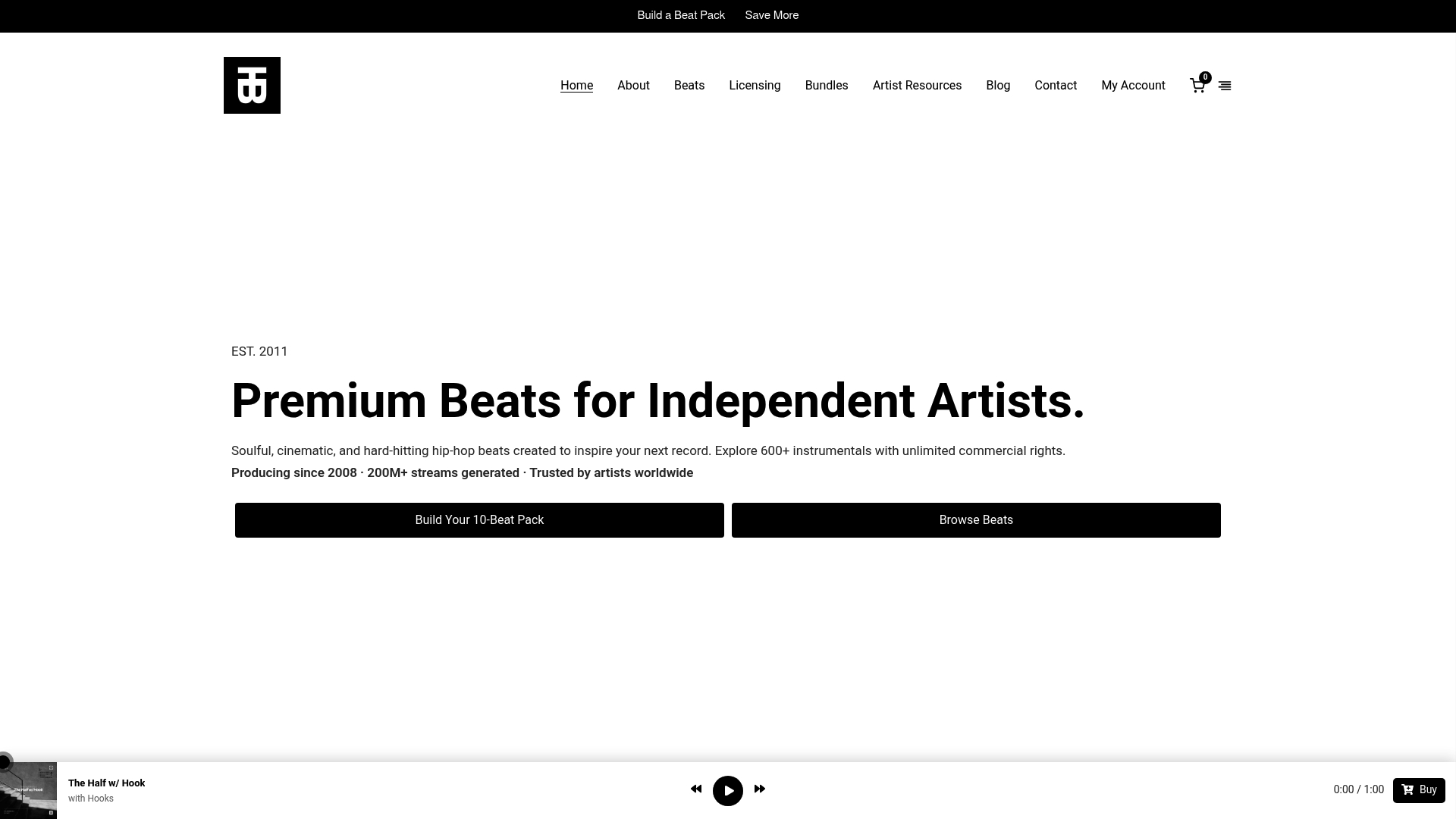
If a specific record is already performing and you want the beat removed from the market entirely, exclusive rights may be available with pricing on request. Browse available licensing tiers to compare what each unlocks, or explore catalogs of hundreds of instrumentals to find your next release.
Sources
- Music Modernization Act resources / U.S. Copyright Office
- Content ID overview — YouTube Help
- The MLC — official site
- Mechanical and performance royalties — Royalty Exchange
FAQ
Can You Copyright a Song Made With a Leased Beat?
You can copyright the new sound recording and any original lyrics or melody you add, but you cannot copyright the underlying instrumental unless your license transfers those rights. Registering with the U.S. Copyright Office protects your specific recording, not the beat itself.
Does a Producer Still Get Royalties After Leasing a Beat?
Yes. A producer who leases a beat non-exclusively keeps ownership of the composition and can continue licensing it to other artists, earning fees from each sale. If that composition later generates mechanical or performance royalties, the producer’s publishing share typically continues regardless of how many artists have leased it.
How Can I Monetize My Beats as a Producer?
Producers monetize beats by selling tiered licenses, such as MP3, WAV, and trackout leases, at different price points, then reserving exclusive rights sales for higher-paying buyers. This licensing ladder lets the same instrumental generate recurring revenue across many non-exclusive sales before an exclusive deal ever closes.
What Happens When You Lease a Beat?
Leasing a beat gives you a defined, usually non-exclusive, right to record and distribute a song using that instrumental under the terms stated in the license. Depending on the tier, you may face streaming caps, territory limits, or file-format restrictions, and platforms like Tellingbeatzz’s MP3, WAV, and Trackout Unlimited tiers remove revenue caps entirely under their unlimited commercial terms.

No Comments