


Fast Sample Clearance Workflow or Licensed Beats for Indie Artists
Any recognizable use of another artist’s recorded audio, or a distinct portion of the underlying composition, requires permission before you release music built on it. Clearing a sample means securing two separate licenses, the master and the composition, or choosing an alternative path like interpolation or a licensed beat pack. Once you have that written permission, your track carries a legitimate right to exist, to earn royalties, and to stay online without the threat of a sudden takedown.
TL;DR:
- Clearing both the master recording license and the composition license is essential before releasing any sampled music to avoid takedowns and legal issues.
- Costs and timelines for clearance depend on the recognizability of the sample, ownership fragmentation, and whether the sample has charted or has ongoing sync placements.
- Re-recording the music, using pre-cleared or royalty-free sample packs, or licensing beats from platforms like Tellingbeatzz can bypass lengthy clearance processes effectively.
- Myths such as “short samples are safe” or “transformation clears ownership” can lead to legal disputes; any recognizable sample requires proper clearance regardless of length or sound alterations.
- Confirming rights ownership involves verifying chain-of-title documentation and obtaining signed agreements before releasing, particularly to prevent delays or rights reclaims.
Table of Contents
- What Is Sample Clearance and Why Does It Matter?
- What Are the Two Licenses You Must Clear?
- How Do You Clear a Sample Step by Step?
- What Do Sample Clearance Costs and Timelines Actually Look Like?
- What Are the Alternatives to Traditional Sample Clearance?
- What Sample Clearance Myths Put Your Release at Risk?
- How Do You Verify Ownership Before You Pay?
- What Should You Check Before You Release a Sampled Track?
- When Does It Make Sense to Clear a Sample vs. Buy a Licensed Beat?
- Why Buying Licensed Beats Skips the Clearance Headache
- Where Can You Verify Rights and Find Pre-Cleared Options?
- Sources
What Is Sample Clearance and Why Does It Matter?
Sample clearance is the process of getting formal, written permission from copyright owners before you use a piece of their recorded audio or composition in your own work. It sounds bureaucratic, but the idea behind it is almost artistic in its own right: it respects the original creator’s ownership over something they built, note by note, take by take.
Two separate rights live inside every piece of recorded music. The master recording is the actual captured performance, the physical audio itself. The composition is the underlying song, its melody, chords, and lyrics, independent of any specific recording. A sample almost always touches both, which is why clearing a sample typically requires two distinct permissions rather than one blanket approval.
Skip that process, and the consequences arrive fast:
- Streaming platforms and distributors can pull the track without warning, often triggered by automated content-matching systems.
- Your distributor may freeze the release entirely, holding it in limbo until you resolve the rights question.
- Royalties already earned can be frozen or clawed back once a rights holder files a claim.
- Original rights holders can pursue legal action, which costs far more than any clearance fee ever would.
None of this happens because artists are careless. It happens because clearance feels invisible until the moment it isn’t, and by then, the song is already out in the world.
What Are the Two Licenses You Must Clear?
Every sample clearance conversation eventually splits into two separate negotiations, because two different types of ownership are involved, and often two entirely different parties hold them.

The master use license covers the actual sound recording. You’re asking permission to use that specific captured performance, not just the song underneath it. Labels, catalog companies, and increasingly independent artists who kept their masters all hold this right. If you’re sampling a 1970s soul record, the master might sit with a major label’s catalog division; if you’re sampling an unsigned artist’s SoundCloud upload, the artist likely owns it outright.
The composition license (also called a publishing or synch license, depending on use) covers the melody and lyrics as written, separate from any recording of them. Songwriters, publishers, and co-writers hold these rights, and they’re often registered with a performance rights organization for royalty tracking purposes.
Here’s a detail that trips up a lot of new producers: registering with ASCAP, BMI, or SESAC does not clear a sample. These organizations track performance royalties once a song is released and registered. They don’t grant permission to use someone else’s copyrighted material beforehand. Songview, the joint ASCAP/BMI database, helps you locate who controls a composition, but locating an owner and clearing rights with them are two different steps entirely.
One shortcut worth knowing early: if you re-record the musical part yourself rather than lifting the original audio, a process called interpolation, you skip the master negotiation completely. You still need to clear the composition, but you’ve eliminated one of the two conversations and often a meaningful chunk of the cost.
How Do You Clear a Sample Step by Step?
Clearing a sample rewards patience and precision more than legal expertise. Most independent artists can handle this process themselves if they follow it in order and document everything along the way.
-
Document the sample precisely. Note the exact timestamps used, how prominently it sits in your mix, whether it’s a hook or a background texture, and whether you used the raw audio or an isolated stem. Precise documentation speeds up every conversation that follows, because rights holders can evaluate your request quickly instead of asking follow-up questions for weeks.
-
Identify both rights holders. Search Songview or the SESAC database for composition ownership. Check label credits, liner notes, and Discogs entries for the master. An ISRC lookup can confirm exactly which recording you’re dealing with, which matters when a song has multiple versions or remasters.
-
Send a clear, concise request. Include your track name, the exact sample timestamps, how the sample functions in your song, your planned release date, and your distribution scope (streaming only, or streaming plus sync and video use). Vague requests get vague, slow responses.
-
Negotiate the real terms. This is where most of the actual back-and-forth happens: a flat fee versus a royalty percentage, the publishing split, territory limits, and which media types are covered. If your budget is tight, a higher royalty percentage in exchange for a lower upfront fee can make an otherwise unaffordable sample workable.
-
Get everything in writing and store it. A verbal “yes” or a friendly text message is not a license. You need a fully executed agreement, signed by every rights holder, before you release anything built on their material.
-
Notify your distributor and update your metadata. Once agreements are signed, pass the license PDFs along to your distributor and make sure sample credits appear in your metadata and cue sheets.
Pro Tip: Send your clearance request the same week you finish the beat, not the week before release. Rights holders rarely move fast, and a two-week delay on their end shouldn’t become a two-week delay on your entire rollout.
What Do Sample Clearance Costs and Timelines Actually Look Like?
Costs vary depending on the parties involved and the sample’s recognizability. Master use fees for songs from major catalogs can be relatively high and may include royalties. Publishing fees follow similar logic, often quoted as either a flat fee or a percentage of the song’s future royalties, sometimes both combined into one negotiated deal. Lesser-known or unsigned artists frequently charge far less, occasionally even trading a smaller upfront fee for a meaningful royalty share instead.
Timeline expectations split into two very different tracks. Pre-cleared sample services can deliver a signed license within hours or days, since the licensing terms are standardized in advance. Direct negotiation with a label or publisher, by contrast, often takes several weeks to a few months, especially when multiple co-writers or catalog owners need to sign off individually.
Three factors drive most of the variation in price and speed:
- Recognizability. An instantly identifiable hook costs more and takes longer to clear than an obscure drum break.
- The original’s commercial performance. A sample from a song that charted or has ongoing sync placements commands a premium.
- Fragmented ownership. The more co-writers, publishers, and catalog holders involved, the longer negotiation stretches and the higher combined fees climb.
Artists who start this process early, well before a planned release date, consistently avoid the launch delays that catch unprepared artists off guard.
What Are the Alternatives to Traditional Sample Clearance?
Clearance isn’t always practical, especially on a tight budget or a tight deadline. A few legitimate paths exist that sidestep the slowest parts of the process without sidestepping the law.
Interpolation means re-recording the melodic or instrumental part yourself instead of using the original audio. This eliminates the master use negotiation entirely since you’re not using anyone’s actual recording, but you still owe the composition owners a publishing clearance for the underlying melody or lyrics.
Pre-cleared sample libraries and royalty-free packs offer another route. Services built specifically around instant licensing can hand you a signed PDF within minutes of purchase, though many of these deals include revenue-share terms or usage restrictions worth reading closely before you build a song around them.
Licensed beats with unlimited commercial rights solve a slightly different problem. Rather than clearing a sample buried inside someone else’s original work, you’re starting from a foundation that was built to be licensed from day one. This is where a catalog like Tellingbeatzz’s instrumental library becomes relevant. There’s no rights holder to track down, no negotiation to schedule, and no waiting period between purchase and release.

Each path trades something. Interpolation costs studio time. Pre-cleared libraries may limit exclusivity. Licensed beats mean you’re not sampling at all, which is a different creative choice entirely, not a lesser one.
What Sample Clearance Myths Put Your Release at Risk?
A surprising number of avoidable legal problems trace back to a handful of persistent myths that get repeated in producer forums and social media comment sections until they start sounding like fact.
The biggest one: there is no safe length of a sample. No number of seconds exempts a sample from clearance requirements, whether it’s four seconds or forty. Copyright law protects the creative substance of what was taken, not a runtime threshold.
A close second: transformation doesn’t erase the obligation. Pitching a vocal up an octave, chopping a drum loop into sixteenths, or running a sample through heavy reverb changes how it sounds, not who owns it. The original creative work is still recognizably present, and that’s what matters legally.
A sample that’s been filtered beyond recognition to your own ear can still be identified by audio fingerprinting technology the moment it hits a streaming platform, which is exactly how most unauthorized samples get flagged after release rather than before.
Watch for these red flags before you move forward with any clearance conversation:
- Uncertain or undocumented chain-of-title, meaning nobody can clearly show who owns what.
- Conflicting ownership claims from two different parties for the same rights.
- Oral promises or informal text messages standing in for an actual signed agreement.
Any one of these should pause your timeline until it’s resolved.
How Do You Verify Ownership Before You Pay?
Rights ownership changes hands more often than most independent artists expect. Catalogs get sold, publishers merge, and songwriters sign new deals that shift who controls what. Ownership is often fragmented and can transfer between parties, which is exactly why professionals insist on paperwork before money changes hands.
- Gather the essentials first. You’ll want the ISRC code, original recording credits, publisher names, PRO registration numbers, and any prior licensing PDFs tied to the sample.
- Request chain-of-title confirmation. Ask the party you’re negotiating with to show proof of their current ownership, particularly if the catalog has changed hands recently.
- Draft a split sheet. If your own track involves co-producers or co-writers, document each person’s percentage before you finalize any outside licensing deal.
- Wait for full execution before paying. Never send a fee or sign anything until every rights holder involved has confirmed their share and signed the agreement.
Pro Tip: If a publisher hesitates to confirm chain-of-title, that hesitation is information. A legitimate rights holder can usually produce documentation within days.
What Should You Check Before You Release a Sampled Track?
A short checklist can catch problems before they become public ones. Before you distribute anything built on a sample, confirm each of these:
- Executed master use license, signed by every rights holder involved.
- Executed publishing license covering the composition.
- PDF copies of both agreements saved somewhere retrievable.
- Sample credits and timestamps added to your metadata and cue sheet.
- Written notification sent to your distributor confirming clearance is complete.
A brief note to your distributor might read: “This release contains a cleared sample. Licensing documentation is attached and available on request.” That single sentence saves you a support ticket later.
| If clearance is… | Your move |
|---|---|
| Approved and signed | Distribute with confidence; keep PDFs archived |
| Delayed past your deadline | Push the release date rather than skip the paperwork |
| Denied outright | Re-record the part (interpolation) or swap in a licensed beat |
When Does It Make Sense to Clear a Sample vs. Buy a Licensed Beat?
Clearing a sample is worth the time and cost when that specific piece of audio is genuinely irreplaceable, when it’s the emotional core of the song, not just a texture you could swap out without anyone noticing. A soul sample that defines a track’s entire mood earns the wait. A drum fill buried in the background usually doesn’t.
For everything else, speed and predictability tend to matter more than most artists admit upfront. A clearance negotiation that drags on for two months doesn’t just delay a release, it delays momentum, streaming algorithm positioning, and whatever promotional window you’d planned around a drop date.
This is the tradeoff independents underestimate: the cheapest sample, on paper, can become the most expensive one in practice once you factor in lost release timing and legal uncertainty. A licensed beat with unlimited commercial rights sidesteps that risk entirely. Tellingbeatzz’s beat packs come with rights already settled, which means the moment you finish a track, you can release it. No waiting on a publisher’s legal department. No wondering whether a chain-of-title issue will surface six months from now. For an artist trying to build consistent momentum rather than chase one perfect sample, that predictability often outweighs the creative appeal of digging through crates.
— Thomas
Why Buying Licensed Beats Skips the Clearance Headache
Tellingbeatzz gets your track release-ready the moment you download it, with unlimited commercial rights baked into every purchase instead of a rights negotiation waiting at the other end. Where sample clearance means tracking down publishers and hoping a master owner responds within your deadline, a Tellingbeatzz beat pack arrives with its licensing PDF already attached.
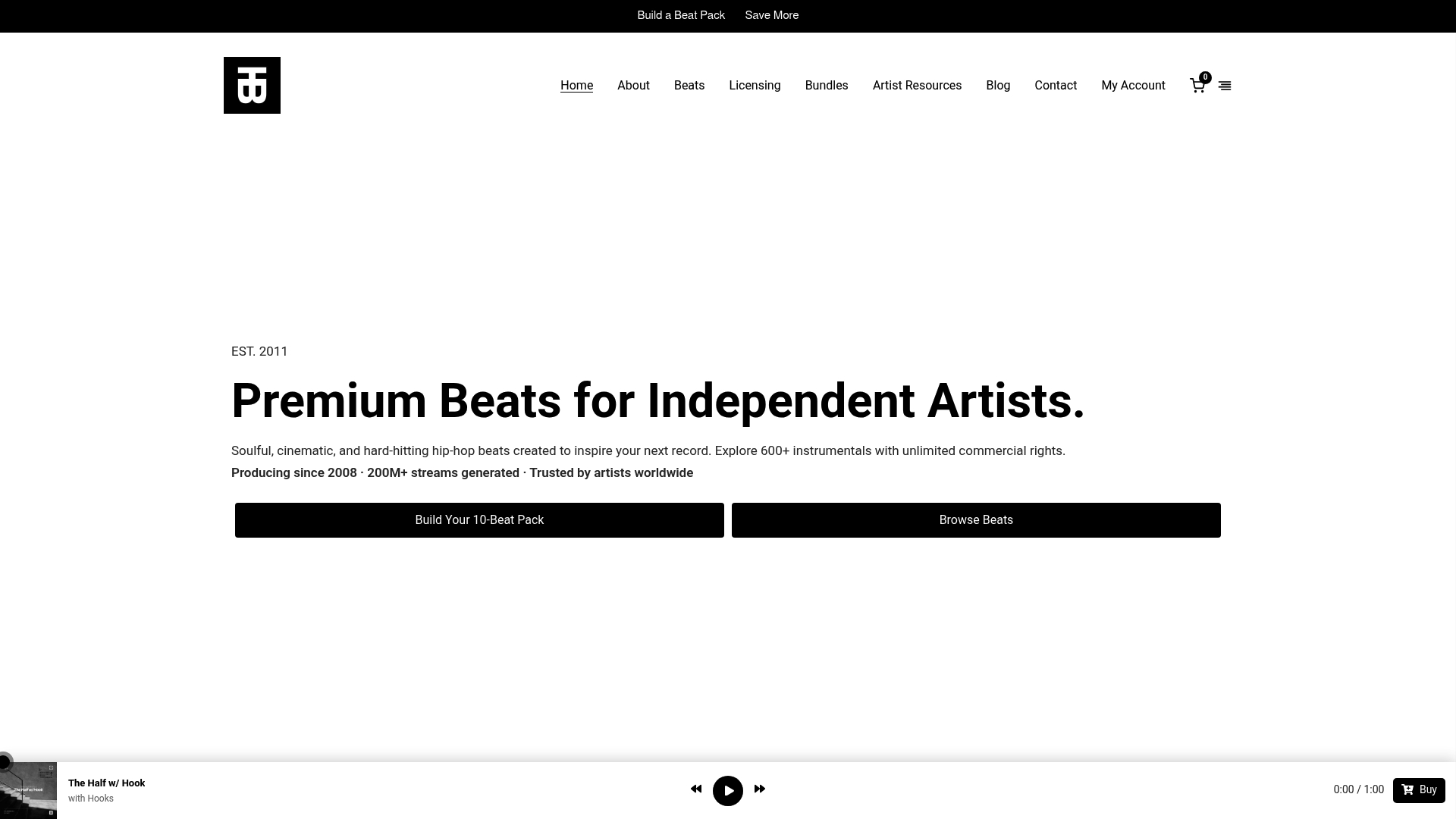
That distinction matters most for artists working against a release calendar rather than an open-ended one. With over 600 instrumentals spanning hip-hop, rap, R&B, and soulful production styles, you can build a custom beat pack around your sound and walk away owning full commercial rights to whatever you create on top of it, no royalty splits, no territory restrictions, no future claim from a rights holder you’ve never met. If you’ve read through the clearance process above and realized your timeline can’t absorb a two-month negotiation, that’s exactly the gap this fills. Browse Tellingbeatzz’s catalog and build a pack around your next release.
Where Can You Verify Rights and Find Pre-Cleared Options?
A handful of resources cover most of what you’ll need throughout the clearance process, each suited to a different step.
- Songview and PRO databases (ASCAP, BMI, SESAC) are your first stop for locating who controls a composition’s publishing rights.
- The Mechanical Licensing Collective handles mechanical royalty administration for streaming and is worth checking when a composition’s digital rights need confirming.
- Discogs and ISRC lookups help confirm exactly which master recording and pressing you’re dealing with, especially for older or reissued material.
- Pre-cleared sample platforms offer instant licensing for artists who want to skip direct negotiation entirely.
- Licensing partners familiar with non-Western catalogs, such as guidance on clearing world-music and film samples, are useful when a sample falls outside typical American publishing structures.
- Tellingbeatzz remains the fastest route when the goal is a release-ready track with commercial rights settled from the start, rather than a specific sample cleared after the fact.
This article is general information, not a substitute for advice from a qualified lawyer. Consult a qualified legal professional about your own circumstances before acting on anything here.
Sources
- How to Clear a Sample: A Step-by-Step Guide for Artists
- How To Clear a Sample (2026): Cost, Steps & When to Skip It
- Chain-of-title, title reports, copyright reports and certificates of clearance
Recommended

No Comments