
Beat License Agreement Templates for Independent Artists
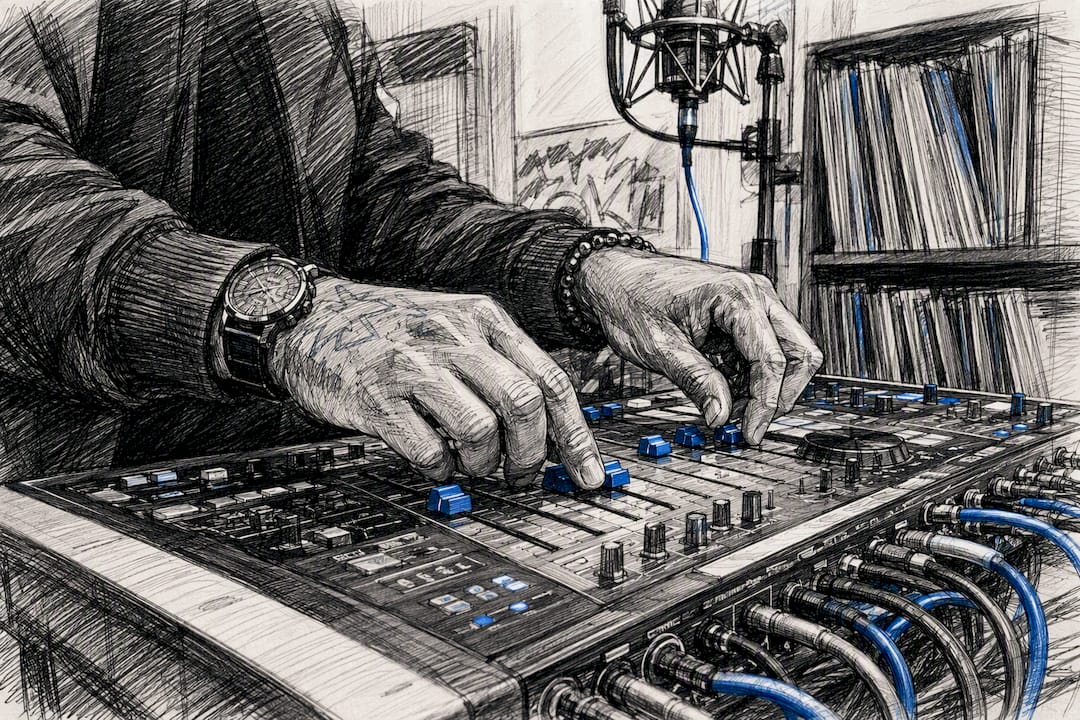
Producer adjusting audio mixer controls

Beat License Agreement Templates for Independent Artists

A beat license agreement is the written contract that lets an artist use a producer’s instrumental under defined limits. and it decides whether that artist ever truly owns their record. If you’re releasing a mixtape or streaming single, a non-exclusive lease usually covers you. If you’re planning a commercial release with real marketing behind it, or a sync placement is on the table, an exclusive license or copyright assignment protects you better. Start here:

  • Pick your license type based on how the song will be used, not just budget.
  • Fill in the grant, term, and usage cap lines before you sign anything.
  • Name both parties by legal name, list the beat ID, the fee, and the exact delivery files.
  • Keep the signed PDF and proof of payment together, forever.

Key Takeaways

A beat license agreement protects both parties only when the grant, term, usage caps, and payment terms are stated explicitly rather than assumed.

Point Details
Match license to use case Non-exclusive leases fit demos and mixtapes; exclusives fit commercial releases with real marketing behind them.
Read the grant language closely Vague grant terms cause more disputes than any other clause in a beat license.
Cap and term must be numbered Leave stream caps, video limits, and term length explicit, never implied.
Register when stakes are real Prioritize copyright registration for exclusive buys or tracks likely to generate sync income.
Choose a platform with built-in licensing Tellingbeatzz pairs instant downloads with a PDF license per purchase and a clear path to upgrade toward exclusive rights.

Table of Contents

What Is a Beat License Agreement, and How Does a Lease Differ From an Exclusive Sale?

A beat license, often called a lease, is permission to use a producer’s beat under specific conditions. It’s not a sale of the underlying composition, and the producer keeps ownership of the instrumental. An exclusive license grants one artist the sole right to use that beat going forward, though the producer may still retain authorship credit and a share of royalties depending on the contract. A copyright assignment is different again. It transfers actual ownership of the copyright itself, which is rare in beat deals and usually reserved for high-value buyouts.

Here’s how those three map to real situations:

  • Non-exclusive lease: demos, mixtapes, SoundCloud drops, early-career singles with modest reach.
  • Exclusive license: commercial singles, EPs, or albums where you need certainty no one else can use that instrumental.
  • Assignment: rare, full-ownership buyouts, typically for artists with serious budgets or labels absorbing the beat entirely.

The rights you hold determine what you can actually do later. A non-exclusive lease rarely includes sync rights, so if you’re chasing a TV or film placement, that has to be negotiated separately, almost always at a higher fee.

What Are the Common Beat License Tiers and What Do They Allow?

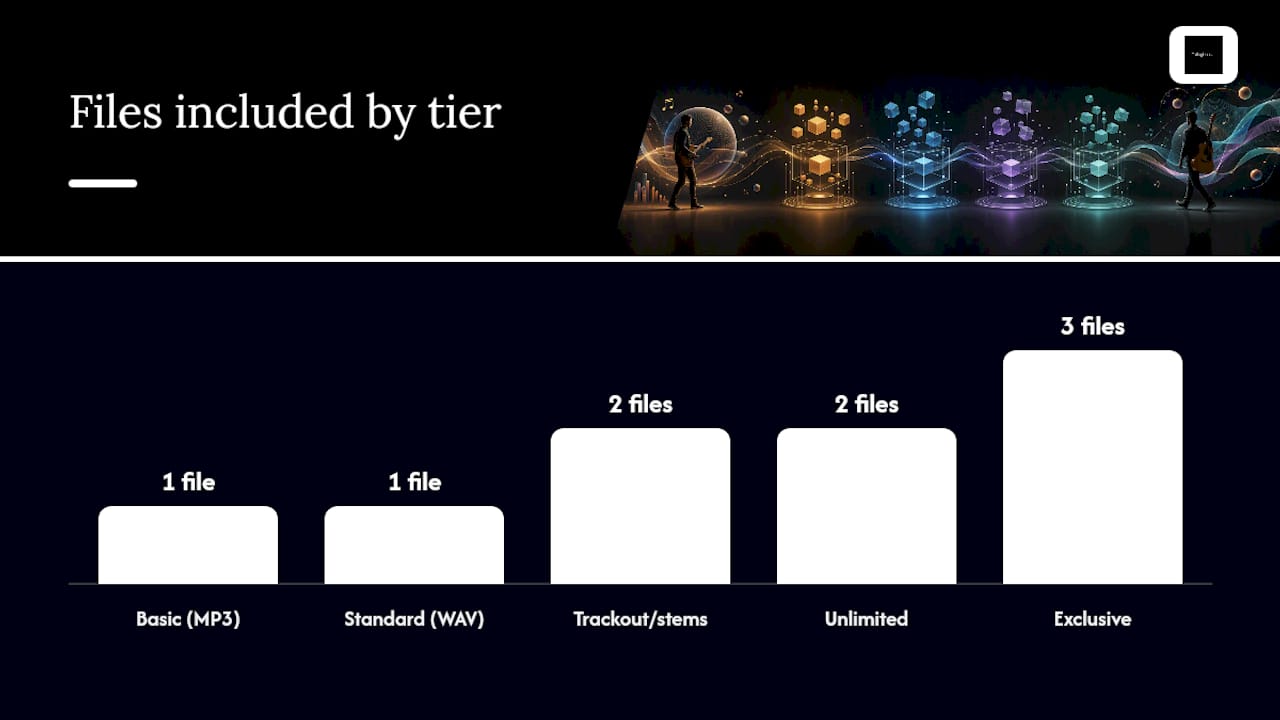
Producers typically sell in tiers, and each one unlocks a little more freedom. A basic MP3 lease is the entry point: low cost, modest stream caps, no stems. A WAV lease steps up audio quality and usually raises the cap. Trackout or stems leases hand you the individual instrument files, which matters if you want a mix engineer to rebuild the record properly. Unlimited leases remove most caps but still leave the producer as the beat’s licensor rather than seller. An exclusive sale is the only tier that removes the beat from resale entirely.

Tier Typical files Usage limits Who it fits
Basic (MP3) MP3 only Stream caps (often under 50,000), limited video use New artists testing a song
Standard (WAV) WAV Higher stream caps, some video allowance Artists releasing to streaming platforms
Trackout/stems WAV + stems Similar caps to WAV tier, mixing rights included Artists working with a mix engineer
Unlimited WAV + stems No stream/sales cap, term still applies Artists expecting viral or sustained reach
Exclusive WAV + stems + project files No cap, beat removed from resale Commercial releases, label-backed projects

Comparison chart of beat license tiers

Caps exist because producers are managing risk across many buyers. A beat sold with a 5,000 stream cap to five different artists is a manageable business; the same beat sold unlimited to five artists is a mess nobody wants. If your song outgrows its lease, most producers let you upgrade to an exclusive and will often credit part of your original lease fee toward the new price.

What Contract Clauses Belong in Every Beat License?

Every clause in a beat license does a specific job, and skipping one usually means finding out the hard way what it was for. Read these line by line, not just the headline terms.

Grant of rights. This line defines exactly what you’re allowed to do: streaming, downloads, live performance, sync, monetized video, Content ID registration. Vague grant language (“use for music purposes”) is a warning sign; specific grant language (“non-exclusive right to reproduce, distribute, and publicly perform the composition embodying the beat for commercial audio releases”) tells you precisely what’s covered.

Term, territory, and usage caps. Most leases run for the life of the copyright or a fixed number of years, and cover a worldwide territory unless stated otherwise. Usage caps typically apply to streams, downloads, or monetized video views, and once you cross them, technically you’re in breach until you upgrade.

Ownership, publishing, and master rights. The producer usually keeps the beat’s underlying composition and master rights unless the contract says an assignment occurred. Your lyrics and performance are yours regardless. Splits, if any, should be spelled out by percentage, not left implied.

Payment and delivery. The contract should state that files are delivered and rights vest only after payment clears, not before. A “no release until paid in full” line protects the producer, and a clear delivery timeline protects you.

Warranties, indemnities, and sample clearance. Ask the producer to warrant that the beat is original and doesn’t infringe on any sampled or third-party material. Avoid signing anything where you’d be solely responsible for clearing a sample you didn’t choose.

Credit and deliverables. Most leases require a producer tag or written credit line (“Prod. by [Name]”) in your release metadata. File formats, stems, and any project files owed should be listed explicitly.

Pro Tip: Before signing, read the grant of rights and the usage cap lines twice. Those two clauses cause more disputes than every other clause combined, according to the clause-level breakdown from entertainment law guides on beat leases.

How Much Do Beat Licenses and Exclusive Deals Typically Cost?

Price tracks almost exactly with the rights included, not the beat’s quality alone. A basic MP3 lease often sits in the low double digits to around $50, a WAV lease costs more, and trackout or unlimited tiers climb higher still because they remove restrictions the producer would otherwise sell separately. Exclusive prices vary widely based on the producer’s catalog reputation and the buyer’s budget, often landing anywhere from a few hundred dollars to several thousand.

What actually moves the number:

  • Included stems or project files raise price because they hand over creative control.
  • Higher or removed usage caps raise price because the producer is absorbing more risk.
  • A publishing buyout, where the producer gives up songwriter royalties entirely, commands the highest premium.

Non-exclusive leases rarely bundle sync rights, so if your song has film or TV potential, expect to negotiate that separately and pay for it. On the negotiation side, a deposit with the balance due on delivery is common for exclusives, and many producers will apply your original lease fee as a credit if you decide to upgrade rather than starting the price from zero.

How Do You Fill Out a Beat License Template Correctly?

A template is only as good as what you put in it. Work through these fields in order:

  1. Parties. Full legal names of both producer and artist, not stage names alone.
  2. Beat identification. Title or catalog ID, so there’s no ambiguity about which instrumental the contract covers.
  3. Grant of rights. Specific permitted uses, written out rather than assumed.
  4. Term and territory. A stated duration and geographic scope, even if it’s simply “worldwide, life of copyright.”
  5. Usage caps. Numeric limits on streams, sales, or video views, if any apply.
  6. Fee and payment terms. Total price, payment method, and when files release relative to payment.
  7. Delivery files. Exact formats owed, MP3, WAV, trackouts, and any deadline.
  8. Signatures. Dated signature block for both parties.

The most common mistakes aren’t dramatic. They’re quiet: a term left blank that defaults to an interpretation neither party intended, a cap that’s implied but never numbered, a missing warranty on sample clearance that leaves the artist exposed if the beat turns out to sample something uncleared. Templates that list every one of these fields up front save you from filling in gaps later under pressure.

Pro Tip: Generate the PDF, collect the signature, and store proof of payment in the same folder as the contract itself. If you ever need to prove your rights to a distributor or a sync licensor, that folder is your entire case.

Where Can You Find a Fillable Beat License Template?

Most reliable templates follow the same skeleton: parties, beat description, grant of rights, term and territory, permitted uses and restrictions, usage caps, payment, delivery, credit, and warranties. For a non-exclusive WAV lease, you’d typically fill in a modest stream cap (say, 50,000), a defined term, and a WAV-only deliverable line, with the producer retaining resale rights to other buyers.

An exclusive license template changes a few things structurally. The payment trigger usually splits into a deposit and a final balance, deliverables expand to include trackouts and sometimes project files, and there’s a specific clause removing the beat from the producer’s catalog once payment clears. If a publishing buyout is part of the deal, that needs its own explicit line stating the producer waives songwriter royalties, since silence on this point defaults to the producer keeping their share.

If multiple people contributed to a beat, or if you’re layering vocals and additional production on top, attach a split sheet as an exhibit. List every prior license issued on that beat if you’re negotiating an exclusive upgrade, since the buyer deserves to know exactly how many non-exclusive copies are already circulating.

Registering your beat isn’t required to own the copyright. Ownership exists the moment the work is created. But registration creates a public record and is a prerequisite for certain federal remedies if someone infringes your work later, which makes it worth doing for anything you expect to earn real money from.

The basic process:

  1. Prepare a deposit copy of the recording or composition.
  2. Choose the correct claim type, sound recording versus musical work, since a beat often qualifies as both.
  3. Submit through the U.S. Copyright Office’s electronic system.
  4. Wait out the processing period, which can run several months depending on volume.
  5. Pay the applicable filing fee, which varies by claim type and filing method.

Prioritize registration for exclusive purchases, for tracks likely to generate sync income, or for anything where litigation risk feels realistic. A lease you’re using on a low-stakes mixtape track doesn’t usually justify the wait and cost, but a record with real commercial momentum does.

What Red Flags Should You Watch for Before Signing?

Some contract language should stop you cold. Watch for:

  • No warranties or indemnities covering sample clearance or originality.
  • Language allowing the producer to revoke your rights retroactively at will.
  • Vague or missing term length, leaving duration open to interpretation.
  • Producer control over Content ID with no clarity on how disputes get resolved.

Before signing, ask direct questions:

  1. “What happens if I exceed the stream cap, do I get a warning or an automatic breach?”
  2. “If I want to upgrade to exclusive later, is my current lease fee credited toward that price?”
  3. “Does this beat sample anything, and can you warrant it’s cleared?”

Artists generally push for clear upgrade paths and explicit sync permissions. Producers generally push to protect resale rights and guarantee payment clears before files go out. Both priorities are reasonable, and a good contract states them plainly instead of leaving them to assumption.

How We Approach Licensing Defaults in Practice

Every beat we license follows the same basic sequence: define the tier, set sensible caps, deliver files only after payment clears, and leave a documented path to upgrade if a track takes off. That order isn’t arbitrary. It’s what keeps a five-dollar mixtape lease from turning into a legal headache six months later when the song blows up beyond what the original terms covered.
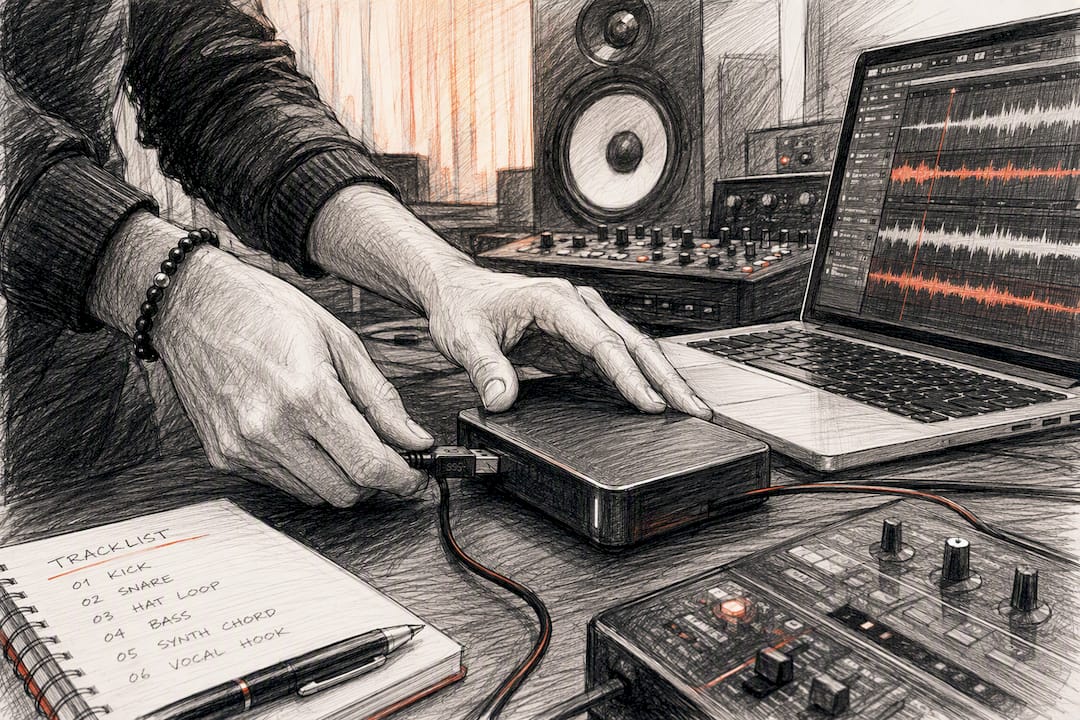
Hands connecting external drive for file delivery

The defaults we recommend favor clarity over cleverness. A cap that’s actually numbered, a term that’s actually stated, a credit line that’s actually required. None of that is dramatic, and that’s the point. Disputes tend to grow in the gaps a contract leaves vague, not in the terms it states plainly. Producers and artists who read the grant language and usage caps before signing rarely end up disputing them later.

How Tellingbeatzz Makes Licensing Faster Without Cutting Corners

Tellingbeatzz gives independent artists something a generic template can’t: a licensing process built directly into the purchase, so the contract, the files, and your proof of payment all arrive at once instead of being assembled after the fact.
Tellingbeatzz

Every beat comes with tiered licensing already structured, MP3, WAV, or trackouts, so you’re choosing rights you understand rather than decoding fine print. Buy a beat and you get an instant download, a PDF license tied to that exact transaction, and unlimited commercial rights on qualifying tiers, meaning you keep full ownership of your finished record. If a song grows beyond your original lease, upgrading to an exclusive is a defined path rather than a renegotiation from scratch. For artists building a catalog fast, custom beat packs let you lock in multiple instrumentals under one licensing structure instead of managing a dozen separate contracts. Start by browsing the catalog and picking the license tier that actually matches your release plan.

Frequently Asked Questions

Is a beat license agreement legally binding without a lawyer?
Yes, a signed beat license agreement is a binding contract as long as both parties agree to defined terms, even without attorney involvement. Legal review becomes worth the cost mainly for exclusive deals or high commercial stakes.

Can I use a leased beat commercially?
Most non-exclusive leases permit commercial use, including streaming sales, but usually cap streams or video views and rarely include sync rights. Check your specific license terms rather than assuming.

What’s the difference between a beat lease and an exclusive license?
A lease grants permission under caps while the producer retains resale rights to other buyers. An exclusive license removes the beat from resale to anyone else, usually for a higher one-time fee.

Do I need to register my beat with the Copyright Office?
Registration isn’t required for ownership, but it strengthens your legal position and is a prerequisite for certain federal remedies if you need to enforce your rights later.

What happens if I exceed my usage cap?
Terms vary by contract, but exceeding a stated cap typically puts you in breach until you upgrade to a higher tier or exclusive license. Always confirm the producer’s specific policy before you cross the limit.

Sources

Created with BabyLoveGrowth AI

No Comments

Leave a Reply

Choose A License

Mp3 Unlimited (+3 FREE)

MP3
License Terms

Unlimited License Agreement

This Unlimited License Agreement (the “Agreement”) is entered into on [Purchase Date] between Thomas Hodek, professionally known as Tellingbeatzz (“Licensor”) and [Customer Full Name] (“Licensee”).
The Licensee has purchased an MP3 Unlimited License for the instrumental titled “[Beat Title]” (“Beat”) for a license fee of [Purchase Price] under Order #[Order Number].
Upon successful payment, this Agreement becomes effective immediately and is delivered electronically together with the licensed Beat files.

1. Grant of License

The Licensor grants the Licensee a non-exclusive, worldwide, non-transferable and perpetual license to use the Beat to create and commercially exploit one or more new songs incorporating the Beat (“New Song”).
The Licensee may add vocals, lyrics, melodies, instrumentation, arrangements and other original contributions to the Beat.
The Beat itself remains the intellectual property of the Licensor and is not sold or transferred to the Licensee.

2. Unlimited Commercial Use

The Licensee may commercially release and use the New Song without limits on:
  • digital or physical distribution
  • sales
  • audio streams
  • monetized video streams
  • music videos
  • live or paid performances
  • radio and online broadcasts
  • social media content
  • albums, EPs, mixtapes and singles
There are no limits on streams, sales, downloads, views or performances generated by the New Song.

3. Master Recording and Revenue

The Licensee may create and commercially exploit a new master recording incorporating the Beat (“Master Recording”).
The Licensee retains the revenue generated directly from exploitation of the Master Recording, including streaming, digital distribution and physical sales, subject to any publishing, mechanical, performance or other composition-based royalties attributable to the Licensor’s share of the underlying composition.
The Licensor does not acquire ownership of the Licensee’s original lyrics, vocals or other independently created contributions.

4. Ownership

The Licensor retains all rights, title and interest in the original Beat, including the applicable copyright interests in the musical composition and sound recording.
This Agreement does not transfer ownership or copyright in the Beat to the Licensee.
The Licensee may protect or register their own original contributions to the New Song but may not claim sole ownership or authorship of the underlying Beat.

5. Publishing and Songwriting

For each New Song created under this Agreement, the underlying composition shall be divided as follows:
Licensee: 50%
Licensor: 50%
The Licensee agrees to properly identify the Licensor’s share when registering the New Song with a Performing Rights Organization, publisher, publishing administrator or other rights-management organization.
Licensor PRO Information:
Writer / Composer: Thomas Hodek
Producer Name: Tellingbeatzz
PRO: GEMA (Germany)
IPI / CAE: 716014087
Publishing Administrator: BeatStars Publishing Worldwide

6. Credit

Where credits are customarily provided, the Licensee agrees to credit the Producer as:
Produced by Tellingbeatzz
or
Beat by Tellingbeatzz
If additional featured-vocalist or hook credits are supplied with the Beat, those credits must also be included where reasonably applicable.

7. Content ID

Because the Beat may be licensed non-exclusively to multiple artists, the Licensee may not register the Beat or any New Song containing the Beat with YouTube Content ID or any similar automated copyright-claiming or fingerprinting system without prior written permission from the Licensor.
The Licensor reserves the right to register and administer the Beat through Content ID or similar systems.
If the Licensee receives a claim relating to a valid licensed use, proof of purchase may be submitted for review and release where appropriate.

8. Synchronization

The Licensee may synchronize the New Song with:
  • music videos
  • YouTube videos
  • social media content
  • podcasts
  • online promotional content
  • independent films and video projects
Major third-party commercial synchronization uses, including national advertising campaigns, television productions, feature films, major video games or comparable commercial projects, require prior written approval from the Licensor.

9. Prohibited Uses

The Licensee may not:
  1. resell, redistribute or sublicense the Beat in its original or substantially similar instrumental form;
  2. upload or distribute the Beat as a standalone instrumental under the Licensee’s name;
  3. include the Beat in beat packs, sample packs, loop libraries, sound libraries or production libraries;
  4. claim authorship or ownership of the original Beat;
  5. register the Beat or New Song with Content ID without permission;
  6. transfer this License to another person or entity without written consent;
  7. share the Beat files with third parties except persons directly involved in producing, recording, mixing, mastering or distributing the New Song.

10. Files Included

The files delivered depend on the license purchased:
MP3 Unlimited: MP3
WAV Unlimited: MP3 + WAV
Trackout Unlimited: MP3 + WAV + available tracked-out stems
The file format supplied does not change the commercial usage rights granted under this Agreement.

11. Non-Exclusive License

This is a non-exclusive license.
The Licensor may continue licensing or selling the same Beat to other customers.
The Licensee acknowledges that other artists may legally release different songs using the same Beat.

12. Future Exclusive Sale

If exclusive rights to the Beat are sold after this Agreement has taken effect, this License remains valid.
The Licensee may continue using, distributing and monetizing the New Song according to the terms of this Agreement.

13. Samples and Third-Party Material

Where the Beat contains third-party material requiring clearance, the Licensee is responsible for obtaining any additional clearance required for the Licensee’s intended use unless otherwise agreed in writing.
The Licensor will disclose known third-party clearance requirements where reasonably possible.

14. Term

This License is valid in perpetuity, provided the Licensee complies with this Agreement.
No renewal payment is required.

15. Breach

If the Licensee materially breaches this Agreement, the Licensor may provide written notice and, where the breach can reasonably be corrected, allow 30 days to cure the violation.
If the breach is not corrected within that period, the Licensor may terminate the License and pursue available remedies.

16. Governing Law

This Agreement is governed by the laws of the Federal Republic of Germany, without prejudice to mandatory consumer protection laws applicable to the Licensee.

17. Entire Agreement

This Agreement, together with the applicable WooCommerce order confirmation, constitutes the complete agreement between the Licensor and Licensee regarding the licensed Beat.
If any provision is found invalid or unenforceable, the remaining provisions remain effective.

WAV Unlimited (+6 FREE)

WAV, MP3
License Terms

Unlimited License Agreement

This Unlimited License Agreement (the “Agreement”) is entered into on [Purchase Date] between Thomas Hodek, professionally known as Tellingbeatzz (“Licensor”) and [Customer Full Name] (“Licensee”).
The Licensee has purchased an WAV Unlimited License for the instrumental titled “[Beat Title]” (“Beat”) for a license fee of [Purchase Price] under Order #[Order Number].
Upon successful payment, this Agreement becomes effective immediately and is delivered electronically together with the licensed Beat files.

1. Grant of License

The Licensor grants the Licensee a non-exclusive, worldwide, non-transferable and perpetual license to use the Beat to create and commercially exploit one or more new songs incorporating the Beat (“New Song”).
The Licensee may add vocals, lyrics, melodies, instrumentation, arrangements and other original contributions to the Beat.
The Beat itself remains the intellectual property of the Licensor and is not sold or transferred to the Licensee.

2. Unlimited Commercial Use

The Licensee may commercially release and use the New Song without limits on:
  • digital or physical distribution
  • sales
  • audio streams
  • monetized video streams
  • music videos
  • live or paid performances
  • radio and online broadcasts
  • social media content
  • albums, EPs, mixtapes and singles
There are no limits on streams, sales, downloads, views or performances generated by the New Song.

3. Master Recording and Revenue

The Licensee may create and commercially exploit a new master recording incorporating the Beat (“Master Recording”).
The Licensee retains the revenue generated directly from exploitation of the Master Recording, including streaming, digital distribution and physical sales, subject to any publishing, mechanical, performance or other composition-based royalties attributable to the Licensor’s share of the underlying composition.
The Licensor does not acquire ownership of the Licensee’s original lyrics, vocals or other independently created contributions.

4. Ownership

The Licensor retains all rights, title and interest in the original Beat, including the applicable copyright interests in the musical composition and sound recording.
This Agreement does not transfer ownership or copyright in the Beat to the Licensee.
The Licensee may protect or register their own original contributions to the New Song but may not claim sole ownership or authorship of the underlying Beat.

5. Publishing and Songwriting

For each New Song created under this Agreement, the underlying composition shall be divided as follows:
Licensee: 50%
Licensor: 50%
The Licensee agrees to properly identify the Licensor’s share when registering the New Song with a Performing Rights Organization, publisher, publishing administrator or other rights-management organization.
Licensor PRO Information:
Writer / Composer: Thomas Hodek
Producer Name: Tellingbeatzz
PRO: GEMA (Germany)
IPI / CAE: 716014087
Publishing Administrator: BeatStars Publishing Worldwide

6. Credit

Where credits are customarily provided, the Licensee agrees to credit the Producer as:
Produced by Tellingbeatzz
or
Beat by Tellingbeatzz
If additional featured-vocalist or hook credits are supplied with the Beat, those credits must also be included where reasonably applicable.

7. Content ID

Because the Beat may be licensed non-exclusively to multiple artists, the Licensee may not register the Beat or any New Song containing the Beat with YouTube Content ID or any similar automated copyright-claiming or fingerprinting system without prior written permission from the Licensor.
The Licensor reserves the right to register and administer the Beat through Content ID or similar systems.
If the Licensee receives a claim relating to a valid licensed use, proof of purchase may be submitted for review and release where appropriate.

8. Synchronization

The Licensee may synchronize the New Song with:
  • music videos
  • YouTube videos
  • social media content
  • podcasts
  • online promotional content
  • independent films and video projects
Major third-party commercial synchronization uses, including national advertising campaigns, television productions, feature films, major video games or comparable commercial projects, require prior written approval from the Licensor.

9. Prohibited Uses

The Licensee may not:
  1. resell, redistribute or sublicense the Beat in its original or substantially similar instrumental form;
  2. upload or distribute the Beat as a standalone instrumental under the Licensee’s name;
  3. include the Beat in beat packs, sample packs, loop libraries, sound libraries or production libraries;
  4. claim authorship or ownership of the original Beat;
  5. register the Beat or New Song with Content ID without permission;
  6. transfer this License to another person or entity without written consent;
  7. share the Beat files with third parties except persons directly involved in producing, recording, mixing, mastering or distributing the New Song.

10. Files Included

The files delivered depend on the license purchased:
MP3 Unlimited: MP3
WAV Unlimited: MP3 + WAV
Trackout Unlimited: MP3 + WAV + available tracked-out stems
The file format supplied does not change the commercial usage rights granted under this Agreement.

11. Non-Exclusive License

This is a non-exclusive license.
The Licensor may continue licensing or selling the same Beat to other customers.
The Licensee acknowledges that other artists may legally release different songs using the same Beat.

12. Future Exclusive Sale

If exclusive rights to the Beat are sold after this Agreement has taken effect, this License remains valid.
The Licensee may continue using, distributing and monetizing the New Song according to the terms of this Agreement.

13. Samples and Third-Party Material

Where the Beat contains third-party material requiring clearance, the Licensee is responsible for obtaining any additional clearance required for the Licensee’s intended use unless otherwise agreed in writing.
The Licensor will disclose known third-party clearance requirements where reasonably possible.

14. Term

This License is valid in perpetuity, provided the Licensee complies with this Agreement.
No renewal payment is required.

15. Breach

If the Licensee materially breaches this Agreement, the Licensor may provide written notice and, where the breach can reasonably be corrected, allow 30 days to cure the violation.
If the breach is not corrected within that period, the Licensor may terminate the License and pursue available remedies.

16. Governing Law

This Agreement is governed by the laws of the Federal Republic of Germany, without prejudice to mandatory consumer protection laws applicable to the Licensee.

17. Entire Agreement

This Agreement, together with the applicable WooCommerce order confirmation, constitutes the complete agreement between the Licensor and Licensee regarding the licensed Beat.
If any provision is found invalid or unenforceable, the remaining provisions remain effective.

Trackout Unlimited (+9 FREE)

WAV, MP3, Trackout
License Terms

Unlimited License Agreement

This Unlimited License Agreement (the “Agreement”) is entered into on [Purchase Date] between Thomas Hodek, professionally known as Tellingbeatzz (“Licensor”) and [Customer Full Name] (“Licensee”).
The Licensee has purchased an Trackout Unlimited License for the instrumental titled “[Beat Title]” (“Beat”) for a license fee of [Purchase Price] under Order #[Order Number].
Upon successful payment, this Agreement becomes effective immediately and is delivered electronically together with the licensed Beat files.

1. Grant of License

The Licensor grants the Licensee a non-exclusive, worldwide, non-transferable and perpetual license to use the Beat to create and commercially exploit one or more new songs incorporating the Beat (“New Song”).
The Licensee may add vocals, lyrics, melodies, instrumentation, arrangements and other original contributions to the Beat.
The Beat itself remains the intellectual property of the Licensor and is not sold or transferred to the Licensee.

2. Unlimited Commercial Use

The Licensee may commercially release and use the New Song without limits on:
  • digital or physical distribution
  • sales
  • audio streams
  • monetized video streams
  • music videos
  • live or paid performances
  • radio and online broadcasts
  • social media content
  • albums, EPs, mixtapes and singles
There are no limits on streams, sales, downloads, views or performances generated by the New Song.

3. Master Recording and Revenue

The Licensee may create and commercially exploit a new master recording incorporating the Beat (“Master Recording”).
The Licensee retains the revenue generated directly from exploitation of the Master Recording, including streaming, digital distribution and physical sales, subject to any publishing, mechanical, performance or other composition-based royalties attributable to the Licensor’s share of the underlying composition.
The Licensor does not acquire ownership of the Licensee’s original lyrics, vocals or other independently created contributions.

4. Ownership

The Licensor retains all rights, title and interest in the original Beat, including the applicable copyright interests in the musical composition and sound recording.
This Agreement does not transfer ownership or copyright in the Beat to the Licensee.
The Licensee may protect or register their own original contributions to the New Song but may not claim sole ownership or authorship of the underlying Beat.

5. Publishing and Songwriting

For each New Song created under this Agreement, the underlying composition shall be divided as follows:
Licensee: 50%
Licensor: 50%
The Licensee agrees to properly identify the Licensor’s share when registering the New Song with a Performing Rights Organization, publisher, publishing administrator or other rights-management organization.
Licensor PRO Information:
Writer / Composer: Thomas Hodek
Producer Name: Tellingbeatzz
PRO: GEMA (Germany)
IPI / CAE: 716014087
Publishing Administrator: BeatStars Publishing Worldwide

6. Credit

Where credits are customarily provided, the Licensee agrees to credit the Producer as:
Produced by Tellingbeatzz
or
Beat by Tellingbeatzz
If additional featured-vocalist or hook credits are supplied with the Beat, those credits must also be included where reasonably applicable.

7. Content ID

Because the Beat may be licensed non-exclusively to multiple artists, the Licensee may not register the Beat or any New Song containing the Beat with YouTube Content ID or any similar automated copyright-claiming or fingerprinting system without prior written permission from the Licensor.
The Licensor reserves the right to register and administer the Beat through Content ID or similar systems.
If the Licensee receives a claim relating to a valid licensed use, proof of purchase may be submitted for review and release where appropriate.

8. Synchronization

The Licensee may synchronize the New Song with:
  • music videos
  • YouTube videos
  • social media content
  • podcasts
  • online promotional content
  • independent films and video projects
Major third-party commercial synchronization uses, including national advertising campaigns, television productions, feature films, major video games or comparable commercial projects, require prior written approval from the Licensor.

9. Prohibited Uses

The Licensee may not:
  1. resell, redistribute or sublicense the Beat in its original or substantially similar instrumental form;
  2. upload or distribute the Beat as a standalone instrumental under the Licensee’s name;
  3. include the Beat in beat packs, sample packs, loop libraries, sound libraries or production libraries;
  4. claim authorship or ownership of the original Beat;
  5. register the Beat or New Song with Content ID without permission;
  6. transfer this License to another person or entity without written consent;
  7. share the Beat files with third parties except persons directly involved in producing, recording, mixing, mastering or distributing the New Song.

10. Files Included

The files delivered depend on the license purchased:
MP3 Unlimited: MP3
WAV Unlimited: MP3 + WAV
Trackout Unlimited: MP3 + WAV + available tracked-out stems
The file format supplied does not change the commercial usage rights granted under this Agreement.

11. Non-Exclusive License

This is a non-exclusive license.
The Licensor may continue licensing or selling the same Beat to other customers.
The Licensee acknowledges that other artists may legally release different songs using the same Beat.

12. Future Exclusive Sale

If exclusive rights to the Beat are sold after this Agreement has taken effect, this License remains valid.
The Licensee may continue using, distributing and monetizing the New Song according to the terms of this Agreement.

13. Samples and Third-Party Material

Where the Beat contains third-party material requiring clearance, the Licensee is responsible for obtaining any additional clearance required for the Licensee’s intended use unless otherwise agreed in writing.
The Licensor will disclose known third-party clearance requirements where reasonably possible.

14. Term

This License is valid in perpetuity, provided the Licensee complies with this Agreement.
No renewal payment is required.

15. Breach

If the Licensee materially breaches this Agreement, the Licensor may provide written notice and, where the breach can reasonably be corrected, allow 30 days to cure the violation.
If the breach is not corrected within that period, the Licensor may terminate the License and pursue available remedies.

16. Governing Law

This Agreement is governed by the laws of the Federal Republic of Germany, without prejudice to mandatory consumer protection laws applicable to the Licensee.

17. Entire Agreement

This Agreement, together with the applicable WooCommerce order confirmation, constitutes the complete agreement between the Licensor and Licensee regarding the licensed Beat.
If any provision is found invalid or unenforceable, the remaining provisions remain effective.

Download

To download your free version of please enter your name and email address and the download link will be emailed to you

Your download link has been emailed to you