

Publishing vs Master Rights: What Every Songwriter Owns
Hands adjusting mixing desk in music studio

Publishing vs Master Rights: What Every Songwriter Owns

Publishing rights cover the song itself, the music and lyrics underneath a recording, while master rights cover the specific captured performance of that song. Every finished track carries two separate copyrights, and each one produces its own royalty stream, its own ownership rules, and its own path to getting paid. Understanding which is which decides whether you collect a fraction of what a song earns or the full amount.


TL;DR:

  • Publishing rights generate multiple royalty streams including mechanical, performance, sync, and print royalties, all of which depend on proper registration and metadata.
  • Master rights control the ownership of the specific recording, with income primarily coming from streaming, sales, and master sync licensing, often linked to who owns the master.
  • Sync licensing requires approval from both publisher and master rights owner, influencing who receives the full payment and how rights are valued long-term.
  • Deal structures can transfer or retain ownership of publishing and master rights, with reversion clauses and recoupment terms significantly affecting future control and income.
  • Accurate registration with PROs, the MLC, SoundExchange, and proper metadata management are critical to collecting all earned royalties, especially for independent artists.

Table of Contents

Publishing Vs Master Rights: The Composition Side Explained

Publishing rights protect the composition, the melody, chord structure, and lyrics that exist independent of any single recording. That copyright vests the moment the song is written down or otherwise fixed in a tangible form, even before anyone presses record. This is a foundational principle of U.S. copyright law, which grants initial ownership to the author, though contracts can reassign that ownership later.

Publishing generates four distinct royalty types, and missing any one of them quietly drains income from a catalog:

  • Mechanical royalties, paid whenever the composition is reproduced, whether that’s a stream, a download, or a cover version.
  • Performance royalties, paid when the song is performed publicly, on radio, in a venue, or through a streaming platform’s public performance component.
  • Sync royalties, paid when the composition is licensed alongside picture, for film, television, or advertising.
  • Print royalties, paid on sheet music and lyric reproductions, a smaller but still real revenue line for working songwriters.

A songwriter’s earnings split into “writer’s share” and “publisher’s share.” If you self-publish, you keep both. Sign an admin deal, and you typically keep both shares but pay the administrator a percentage to collect them. Sign a co-publishing or full publishing deal, and you give up part or all of the publisher’s share in exchange for advances, plugging, or catalog management. Collection depends on two registrations: affiliating with a performing rights organization like ASCAP, BMI, or SESAC, and registering the composition with the Mechanical Licensing Collective. Sloppy metadata, a misspelled songwriter name, a missing ISWC code, breaks that chain before money ever reaches you.

What Master Rights Actually Cover

Master rights protect the sound recording itself, the specific take, mix, and performance captured in the studio or bedroom session. Record the same song twice, and you create two separate masters, each with its own copyright, even though the underlying composition never changes. That distinction is why re-recorded albums exist as a legal strategy, not just a creative one.

Master income arrives through a different set of channels than publishing:

  • Streaming and master share, the largest revenue line for most working artists, paid based on the recording’s plays across platforms.
  • Master sync, the recording-side fee paid when a specific take gets licensed for film, TV, or advertising, separate from the composition’s sync fee.
  • Neighboring rights, royalties earned when a recording is broadcast or performed publicly in many international markets.
  • Physical and digital sales, still a meaningful line for artists with dedicated fan bases.

Ownership here splits along funding lines. A self-funded independent artist typically owns the master outright. A label-funded artist usually assigns master ownership to the label as a condition of the deal, sometimes permanently, sometimes with reversion clauses after a set term. Collection flows through your distributor for streaming payouts and through SoundExchange for noninteractive digital performance royalties, like satellite radio and certain webcasters, that distributors don’t capture. Independent artists now account for 35.9% of recorded music revenue in the U.S., a share that reflects how many creators are choosing to keep masters rather than hand them to a label.

How Publishing and Master Rights Diverge in Real Deals
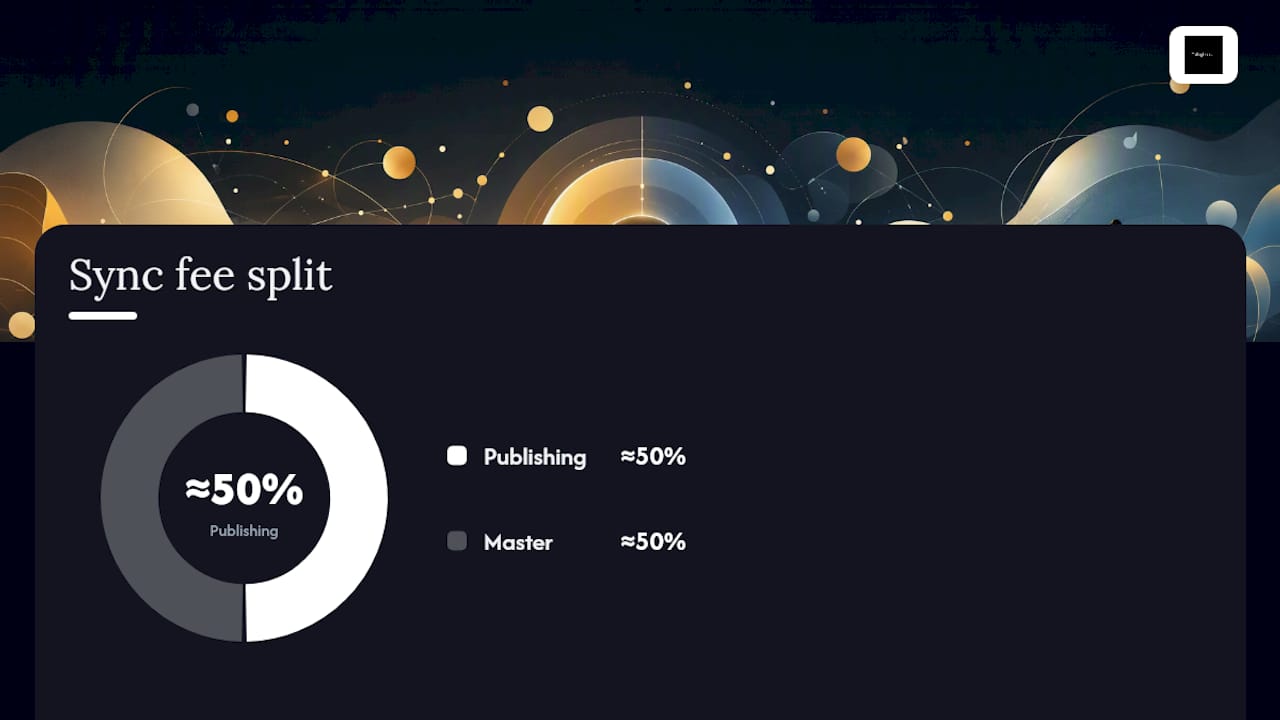
Comparison diagram of publishing and master rights

The clearest way to see the difference is to watch what happens when a sync license lands. A music supervisor needs clearance from two separate parties: whoever controls the publishing (to license the composition) and whoever controls the master (to license that specific recording). Miss either clearance and the deal collapses, no matter how much the supervisor loves the track.

That two-sided approval process shapes everything downstream:

  • Control over approval. The publisher or songwriter approves composition use; the label or artist approves the master use, and both must agree on usage terms and fee.
  • Fee splitting. A sync placement typically divides into a publishing fee and a master fee, often close to a fifty-fifty split, though negotiated deals vary.
  • Who collects the full check. An artist who owns both sides, like Taylor Swift after regaining control of her masters, collects the entire sync fee rather than splitting it with a label or publisher.
  • Valuation profile. Publishing catalogs tend to trade at higher multiples in acquisition markets because a composition earns across every cover, remix, and adaptation for decades, while a master’s value tracks the commercial life of one specific recording.

That valuation gap explains why so many catalog sales in recent years have targeted publishing shares specifically, buyers are pricing in durability, not just current streaming numbers.

How Deals Quietly Reshape Who Owns What

Every deal you sign changes one of these two rights, sometimes both, and the fine print rarely announces it plainly. A publishing deal can mean three very different things depending on the paperwork: an admin deal leaves you owning everything and paying a collection fee (often 10 to 20 percent), a co-publishing deal splits the publisher’s share with a company in exchange for advances, and a full publishing deal transfers most or all of that share for the life of the agreement.

Record deals work on the master side the same way. Traditional label deals often claim master ownership outright, sometimes for the copyright’s full term, with the label recouping recording and marketing costs before you see royalties. Watch for these details before signing anything:

  1. Check who owns the master after recoupment. Some contracts revert ownership to the artist after a set number of years; most traditional deals don’t.
  2. Confirm whether it’s a distribution deal or a label deal. Distribution-only arrangements almost always let you keep the master; label deals frequently don’t.
  3. Read the publishing split language literally. “Co-publishing” and “full publishing” get used loosely in casual conversation but mean very different ownership outcomes on paper.
  4. Ask about reversion clauses on both sides. Publishing and master rights can each carry separate reversion terms, and one reverting doesn’t mean the other does.

Pro Tip: Never assume a “standard” deal term is actually standard. Splits, reversion windows, and recoupment structures vary widely between labels, and the only version that matters is the one written into your specific contract.

Your Registration Checklist for Collecting Both Sides

Rights hygiene is the unglamorous work that determines whether a catalog earns what it should. Independent artists who register only with a distributor are collecting master income while leaving publishing money on the table.

  1. Affiliate with a PRO (ASCAP, BMI, or SESAC) to collect performance royalties on the composition.
  2. Register every composition with the MLC to collect mechanical royalties from U.S. streaming and downloads.
  3. Set up distributor accounts correctly, listing accurate songwriter and performer splits before release, not after.
  4. Register with SoundExchange to capture noninteractive digital performance royalties on the master side.
  5. Double check metadata, ISRC and ISWC codes, songwriter credits, and split percentages, before a single/album goes live.
  6. Decide whether to self-administer or hire an admin service once catalog size makes manual tracking unmanageable.

Unmatched royalties remain a persistent problem industry wide, and the MLC’s own transparency reporting has flagged large pools of previously unclaimed publishing income sitting unpaid simply because songwriters never registered their compositions.

What Transparent Licensing Looks Like From the Beat Side

When independent artists build a song on a licensed beat, the same ownership questions apply in miniature. A transparent license should spell out exactly what’s granted: commercial use rights, whether the license is exclusive, and confirmation that the artist, not the beatmaker, retains ownership of their finished master. Tellingbeatzz structures its licensing this way, with unlimited commercial rights built into every purchase across its catalog of more than 600 instrumentals, so artists know precisely what they own before they release a single track. That clarity matters because a beat license with murky ownership language can quietly complicate publishing splits later, and the platform’s catalog has backed over 200 million streams built on that transparency.
Hands on MIDI keyboard in home studio

Deciding When to Keep, License, or Sell

Early-career artists should prioritize keeping control and registering everything, even before any money arrives. Growth-stage acts can consider selective publishing or distribution deals, but weigh reversion terms as heavily as the advance. Established acts evaluating a catalog sale should model long-term revenue against the certainty of a lump sum, control rarely comes back once it’s gone.

— Thomas

Sources

No Comments

Leave a Reply

Choose A License

Mp3 Unlimited (+3 FREE)

MP3
License Terms

Unlimited License Agreement

This Unlimited License Agreement (the “Agreement”) is entered into on [Purchase Date] between Thomas Hodek, professionally known as Tellingbeatzz (“Licensor”) and [Customer Full Name] (“Licensee”).
The Licensee has purchased an MP3 Unlimited License for the instrumental titled “[Beat Title]” (“Beat”) for a license fee of [Purchase Price] under Order #[Order Number].
Upon successful payment, this Agreement becomes effective immediately and is delivered electronically together with the licensed Beat files.

1. Grant of License

The Licensor grants the Licensee a non-exclusive, worldwide, non-transferable and perpetual license to use the Beat to create and commercially exploit one or more new songs incorporating the Beat (“New Song”).
The Licensee may add vocals, lyrics, melodies, instrumentation, arrangements and other original contributions to the Beat.
The Beat itself remains the intellectual property of the Licensor and is not sold or transferred to the Licensee.

2. Unlimited Commercial Use

The Licensee may commercially release and use the New Song without limits on:
  • digital or physical distribution
  • sales
  • audio streams
  • monetized video streams
  • music videos
  • live or paid performances
  • radio and online broadcasts
  • social media content
  • albums, EPs, mixtapes and singles
There are no limits on streams, sales, downloads, views or performances generated by the New Song.

3. Master Recording and Revenue

The Licensee may create and commercially exploit a new master recording incorporating the Beat (“Master Recording”).
The Licensee retains the revenue generated directly from exploitation of the Master Recording, including streaming, digital distribution and physical sales, subject to any publishing, mechanical, performance or other composition-based royalties attributable to the Licensor’s share of the underlying composition.
The Licensor does not acquire ownership of the Licensee’s original lyrics, vocals or other independently created contributions.

4. Ownership

The Licensor retains all rights, title and interest in the original Beat, including the applicable copyright interests in the musical composition and sound recording.
This Agreement does not transfer ownership or copyright in the Beat to the Licensee.
The Licensee may protect or register their own original contributions to the New Song but may not claim sole ownership or authorship of the underlying Beat.

5. Publishing and Songwriting

For each New Song created under this Agreement, the underlying composition shall be divided as follows:
Licensee: 50%
Licensor: 50%
The Licensee agrees to properly identify the Licensor’s share when registering the New Song with a Performing Rights Organization, publisher, publishing administrator or other rights-management organization.
Licensor PRO Information:
Writer / Composer: Thomas Hodek
Producer Name: Tellingbeatzz
PRO: GEMA (Germany)
IPI / CAE: 716014087
Publishing Administrator: BeatStars Publishing Worldwide

6. Credit

Where credits are customarily provided, the Licensee agrees to credit the Producer as:
Produced by Tellingbeatzz
or
Beat by Tellingbeatzz
If additional featured-vocalist or hook credits are supplied with the Beat, those credits must also be included where reasonably applicable.

7. Content ID

Because the Beat may be licensed non-exclusively to multiple artists, the Licensee may not register the Beat or any New Song containing the Beat with YouTube Content ID or any similar automated copyright-claiming or fingerprinting system without prior written permission from the Licensor.
The Licensor reserves the right to register and administer the Beat through Content ID or similar systems.
If the Licensee receives a claim relating to a valid licensed use, proof of purchase may be submitted for review and release where appropriate.

8. Synchronization

The Licensee may synchronize the New Song with:
  • music videos
  • YouTube videos
  • social media content
  • podcasts
  • online promotional content
  • independent films and video projects
Major third-party commercial synchronization uses, including national advertising campaigns, television productions, feature films, major video games or comparable commercial projects, require prior written approval from the Licensor.

9. Prohibited Uses

The Licensee may not:
  1. resell, redistribute or sublicense the Beat in its original or substantially similar instrumental form;
  2. upload or distribute the Beat as a standalone instrumental under the Licensee’s name;
  3. include the Beat in beat packs, sample packs, loop libraries, sound libraries or production libraries;
  4. claim authorship or ownership of the original Beat;
  5. register the Beat or New Song with Content ID without permission;
  6. transfer this License to another person or entity without written consent;
  7. share the Beat files with third parties except persons directly involved in producing, recording, mixing, mastering or distributing the New Song.

10. Files Included

The files delivered depend on the license purchased:
MP3 Unlimited: MP3
WAV Unlimited: MP3 + WAV
Trackout Unlimited: MP3 + WAV + available tracked-out stems
The file format supplied does not change the commercial usage rights granted under this Agreement.

11. Non-Exclusive License

This is a non-exclusive license.
The Licensor may continue licensing or selling the same Beat to other customers.
The Licensee acknowledges that other artists may legally release different songs using the same Beat.

12. Future Exclusive Sale

If exclusive rights to the Beat are sold after this Agreement has taken effect, this License remains valid.
The Licensee may continue using, distributing and monetizing the New Song according to the terms of this Agreement.

13. Samples and Third-Party Material

Where the Beat contains third-party material requiring clearance, the Licensee is responsible for obtaining any additional clearance required for the Licensee’s intended use unless otherwise agreed in writing.
The Licensor will disclose known third-party clearance requirements where reasonably possible.

14. Term

This License is valid in perpetuity, provided the Licensee complies with this Agreement.
No renewal payment is required.

15. Breach

If the Licensee materially breaches this Agreement, the Licensor may provide written notice and, where the breach can reasonably be corrected, allow 30 days to cure the violation.
If the breach is not corrected within that period, the Licensor may terminate the License and pursue available remedies.

16. Governing Law

This Agreement is governed by the laws of the Federal Republic of Germany, without prejudice to mandatory consumer protection laws applicable to the Licensee.

17. Entire Agreement

This Agreement, together with the applicable WooCommerce order confirmation, constitutes the complete agreement between the Licensor and Licensee regarding the licensed Beat.
If any provision is found invalid or unenforceable, the remaining provisions remain effective.

WAV Unlimited (+6 FREE)

WAV, MP3
License Terms

Unlimited License Agreement

This Unlimited License Agreement (the “Agreement”) is entered into on [Purchase Date] between Thomas Hodek, professionally known as Tellingbeatzz (“Licensor”) and [Customer Full Name] (“Licensee”).
The Licensee has purchased an WAV Unlimited License for the instrumental titled “[Beat Title]” (“Beat”) for a license fee of [Purchase Price] under Order #[Order Number].
Upon successful payment, this Agreement becomes effective immediately and is delivered electronically together with the licensed Beat files.

1. Grant of License

The Licensor grants the Licensee a non-exclusive, worldwide, non-transferable and perpetual license to use the Beat to create and commercially exploit one or more new songs incorporating the Beat (“New Song”).
The Licensee may add vocals, lyrics, melodies, instrumentation, arrangements and other original contributions to the Beat.
The Beat itself remains the intellectual property of the Licensor and is not sold or transferred to the Licensee.

2. Unlimited Commercial Use

The Licensee may commercially release and use the New Song without limits on:
  • digital or physical distribution
  • sales
  • audio streams
  • monetized video streams
  • music videos
  • live or paid performances
  • radio and online broadcasts
  • social media content
  • albums, EPs, mixtapes and singles
There are no limits on streams, sales, downloads, views or performances generated by the New Song.

3. Master Recording and Revenue

The Licensee may create and commercially exploit a new master recording incorporating the Beat (“Master Recording”).
The Licensee retains the revenue generated directly from exploitation of the Master Recording, including streaming, digital distribution and physical sales, subject to any publishing, mechanical, performance or other composition-based royalties attributable to the Licensor’s share of the underlying composition.
The Licensor does not acquire ownership of the Licensee’s original lyrics, vocals or other independently created contributions.

4. Ownership

The Licensor retains all rights, title and interest in the original Beat, including the applicable copyright interests in the musical composition and sound recording.
This Agreement does not transfer ownership or copyright in the Beat to the Licensee.
The Licensee may protect or register their own original contributions to the New Song but may not claim sole ownership or authorship of the underlying Beat.

5. Publishing and Songwriting

For each New Song created under this Agreement, the underlying composition shall be divided as follows:
Licensee: 50%
Licensor: 50%
The Licensee agrees to properly identify the Licensor’s share when registering the New Song with a Performing Rights Organization, publisher, publishing administrator or other rights-management organization.
Licensor PRO Information:
Writer / Composer: Thomas Hodek
Producer Name: Tellingbeatzz
PRO: GEMA (Germany)
IPI / CAE: 716014087
Publishing Administrator: BeatStars Publishing Worldwide

6. Credit

Where credits are customarily provided, the Licensee agrees to credit the Producer as:
Produced by Tellingbeatzz
or
Beat by Tellingbeatzz
If additional featured-vocalist or hook credits are supplied with the Beat, those credits must also be included where reasonably applicable.

7. Content ID

Because the Beat may be licensed non-exclusively to multiple artists, the Licensee may not register the Beat or any New Song containing the Beat with YouTube Content ID or any similar automated copyright-claiming or fingerprinting system without prior written permission from the Licensor.
The Licensor reserves the right to register and administer the Beat through Content ID or similar systems.
If the Licensee receives a claim relating to a valid licensed use, proof of purchase may be submitted for review and release where appropriate.

8. Synchronization

The Licensee may synchronize the New Song with:
  • music videos
  • YouTube videos
  • social media content
  • podcasts
  • online promotional content
  • independent films and video projects
Major third-party commercial synchronization uses, including national advertising campaigns, television productions, feature films, major video games or comparable commercial projects, require prior written approval from the Licensor.

9. Prohibited Uses

The Licensee may not:
  1. resell, redistribute or sublicense the Beat in its original or substantially similar instrumental form;
  2. upload or distribute the Beat as a standalone instrumental under the Licensee’s name;
  3. include the Beat in beat packs, sample packs, loop libraries, sound libraries or production libraries;
  4. claim authorship or ownership of the original Beat;
  5. register the Beat or New Song with Content ID without permission;
  6. transfer this License to another person or entity without written consent;
  7. share the Beat files with third parties except persons directly involved in producing, recording, mixing, mastering or distributing the New Song.

10. Files Included

The files delivered depend on the license purchased:
MP3 Unlimited: MP3
WAV Unlimited: MP3 + WAV
Trackout Unlimited: MP3 + WAV + available tracked-out stems
The file format supplied does not change the commercial usage rights granted under this Agreement.

11. Non-Exclusive License

This is a non-exclusive license.
The Licensor may continue licensing or selling the same Beat to other customers.
The Licensee acknowledges that other artists may legally release different songs using the same Beat.

12. Future Exclusive Sale

If exclusive rights to the Beat are sold after this Agreement has taken effect, this License remains valid.
The Licensee may continue using, distributing and monetizing the New Song according to the terms of this Agreement.

13. Samples and Third-Party Material

Where the Beat contains third-party material requiring clearance, the Licensee is responsible for obtaining any additional clearance required for the Licensee’s intended use unless otherwise agreed in writing.
The Licensor will disclose known third-party clearance requirements where reasonably possible.

14. Term

This License is valid in perpetuity, provided the Licensee complies with this Agreement.
No renewal payment is required.

15. Breach

If the Licensee materially breaches this Agreement, the Licensor may provide written notice and, where the breach can reasonably be corrected, allow 30 days to cure the violation.
If the breach is not corrected within that period, the Licensor may terminate the License and pursue available remedies.

16. Governing Law

This Agreement is governed by the laws of the Federal Republic of Germany, without prejudice to mandatory consumer protection laws applicable to the Licensee.

17. Entire Agreement

This Agreement, together with the applicable WooCommerce order confirmation, constitutes the complete agreement between the Licensor and Licensee regarding the licensed Beat.
If any provision is found invalid or unenforceable, the remaining provisions remain effective.

Trackout Unlimited (+9 FREE)

WAV, MP3, Trackout
License Terms

Unlimited License Agreement

This Unlimited License Agreement (the “Agreement”) is entered into on [Purchase Date] between Thomas Hodek, professionally known as Tellingbeatzz (“Licensor”) and [Customer Full Name] (“Licensee”).
The Licensee has purchased an Trackout Unlimited License for the instrumental titled “[Beat Title]” (“Beat”) for a license fee of [Purchase Price] under Order #[Order Number].
Upon successful payment, this Agreement becomes effective immediately and is delivered electronically together with the licensed Beat files.

1. Grant of License

The Licensor grants the Licensee a non-exclusive, worldwide, non-transferable and perpetual license to use the Beat to create and commercially exploit one or more new songs incorporating the Beat (“New Song”).
The Licensee may add vocals, lyrics, melodies, instrumentation, arrangements and other original contributions to the Beat.
The Beat itself remains the intellectual property of the Licensor and is not sold or transferred to the Licensee.

2. Unlimited Commercial Use

The Licensee may commercially release and use the New Song without limits on:
  • digital or physical distribution
  • sales
  • audio streams
  • monetized video streams
  • music videos
  • live or paid performances
  • radio and online broadcasts
  • social media content
  • albums, EPs, mixtapes and singles
There are no limits on streams, sales, downloads, views or performances generated by the New Song.

3. Master Recording and Revenue

The Licensee may create and commercially exploit a new master recording incorporating the Beat (“Master Recording”).
The Licensee retains the revenue generated directly from exploitation of the Master Recording, including streaming, digital distribution and physical sales, subject to any publishing, mechanical, performance or other composition-based royalties attributable to the Licensor’s share of the underlying composition.
The Licensor does not acquire ownership of the Licensee’s original lyrics, vocals or other independently created contributions.

4. Ownership

The Licensor retains all rights, title and interest in the original Beat, including the applicable copyright interests in the musical composition and sound recording.
This Agreement does not transfer ownership or copyright in the Beat to the Licensee.
The Licensee may protect or register their own original contributions to the New Song but may not claim sole ownership or authorship of the underlying Beat.

5. Publishing and Songwriting

For each New Song created under this Agreement, the underlying composition shall be divided as follows:
Licensee: 50%
Licensor: 50%
The Licensee agrees to properly identify the Licensor’s share when registering the New Song with a Performing Rights Organization, publisher, publishing administrator or other rights-management organization.
Licensor PRO Information:
Writer / Composer: Thomas Hodek
Producer Name: Tellingbeatzz
PRO: GEMA (Germany)
IPI / CAE: 716014087
Publishing Administrator: BeatStars Publishing Worldwide

6. Credit

Where credits are customarily provided, the Licensee agrees to credit the Producer as:
Produced by Tellingbeatzz
or
Beat by Tellingbeatzz
If additional featured-vocalist or hook credits are supplied with the Beat, those credits must also be included where reasonably applicable.

7. Content ID

Because the Beat may be licensed non-exclusively to multiple artists, the Licensee may not register the Beat or any New Song containing the Beat with YouTube Content ID or any similar automated copyright-claiming or fingerprinting system without prior written permission from the Licensor.
The Licensor reserves the right to register and administer the Beat through Content ID or similar systems.
If the Licensee receives a claim relating to a valid licensed use, proof of purchase may be submitted for review and release where appropriate.

8. Synchronization

The Licensee may synchronize the New Song with:
  • music videos
  • YouTube videos
  • social media content
  • podcasts
  • online promotional content
  • independent films and video projects
Major third-party commercial synchronization uses, including national advertising campaigns, television productions, feature films, major video games or comparable commercial projects, require prior written approval from the Licensor.

9. Prohibited Uses

The Licensee may not:
  1. resell, redistribute or sublicense the Beat in its original or substantially similar instrumental form;
  2. upload or distribute the Beat as a standalone instrumental under the Licensee’s name;
  3. include the Beat in beat packs, sample packs, loop libraries, sound libraries or production libraries;
  4. claim authorship or ownership of the original Beat;
  5. register the Beat or New Song with Content ID without permission;
  6. transfer this License to another person or entity without written consent;
  7. share the Beat files with third parties except persons directly involved in producing, recording, mixing, mastering or distributing the New Song.

10. Files Included

The files delivered depend on the license purchased:
MP3 Unlimited: MP3
WAV Unlimited: MP3 + WAV
Trackout Unlimited: MP3 + WAV + available tracked-out stems
The file format supplied does not change the commercial usage rights granted under this Agreement.

11. Non-Exclusive License

This is a non-exclusive license.
The Licensor may continue licensing or selling the same Beat to other customers.
The Licensee acknowledges that other artists may legally release different songs using the same Beat.

12. Future Exclusive Sale

If exclusive rights to the Beat are sold after this Agreement has taken effect, this License remains valid.
The Licensee may continue using, distributing and monetizing the New Song according to the terms of this Agreement.

13. Samples and Third-Party Material

Where the Beat contains third-party material requiring clearance, the Licensee is responsible for obtaining any additional clearance required for the Licensee’s intended use unless otherwise agreed in writing.
The Licensor will disclose known third-party clearance requirements where reasonably possible.

14. Term

This License is valid in perpetuity, provided the Licensee complies with this Agreement.
No renewal payment is required.

15. Breach

If the Licensee materially breaches this Agreement, the Licensor may provide written notice and, where the breach can reasonably be corrected, allow 30 days to cure the violation.
If the breach is not corrected within that period, the Licensor may terminate the License and pursue available remedies.

16. Governing Law

This Agreement is governed by the laws of the Federal Republic of Germany, without prejudice to mandatory consumer protection laws applicable to the Licensee.

17. Entire Agreement

This Agreement, together with the applicable WooCommerce order confirmation, constitutes the complete agreement between the Licensor and Licensee regarding the licensed Beat.
If any provision is found invalid or unenforceable, the remaining provisions remain effective.

Download

To download your free version of please enter your name and email address and the download link will be emailed to you

Your download link has been emailed to you