

Stop Chasing Views: TikTok Music Monetization for Indie Musicians
Yes, TikTok pays artists, but only through a handful of specific channels: sound royalties, Creator Rewards, LIVE gifts, TikTok Pulse, and Commercial Music Library placements. The real money, though, comes from something else entirely: converting TikTok attention into streams, sales, and lasting fans. Get there by delivering your music through a licensed distributor and confirming it’s tracked correctly before you chase anything else.
TL;DR:
- Sound royalties generated from tracks in TikTok’s official library typically pay between $7 and $13 per million sound views, depending on deal terms and territory.
- Proper delivery through a licensed distributor with an ISRC code is essential for tracking usage and ensuring you receive royalties; user-uploaded “original sounds” yield no trackable revenue.
- Achieving eligibility for TikTok monetization programs like Creator Rewards or Pulse requires meeting follower and view thresholds, which are variable and often take months to reflect in payouts.
- The most profitable strategy involves converting TikTok attention into streams, sales, or licensing deals on other platforms, not relying solely on TikTok’s native payouts.
- Building a catalog with professionally produced beats and pre-licensed content can enhance monetization potential and streamline revenue generation from viral moments.
Table of Contents
- How TikTok Music Monetization Actually Pays Artists
- Why Distribution Decides Whether You Get Paid at All
- What Are TikTok’s Eligibility Thresholds and Payout Timelines?
- Where to Focus for Real TikTok Music Profit Strategies
- Setting Up Distribution, Opt-Ins, and Royalty Registration
- What Working Musicians Should Know Before They Chase Views
- The Discovery-First Mindset Behind TikTok Royalties
- Turn TikTok Views Into Real Sales With the Right Beat
- Where to Verify Program Details and Payout Terms
- Sources
- FAQ
How TikTok Music Monetization Actually Pays Artists
TikTok monetization for musicians isn’t one program. It’s five separate revenue streams, each with its own mechanics, gatekeeping, and payout logic.
Sound royalties are the foundation. When a distributor delivers your track to TikTok’s audio library, every new video built with that sound generates a small royalty. Fingerprinted user uploads (someone recording your song off their phone) work differently and pay less reliably. Creator Rewards, TikTok’s program for original video content, technically includes music, but original songs rarely perform well here since the program favors longer-form personal content over background tracks. LIVE gifts convert viewer generosity into cash through TikTok’s coin system, with the platform keeping a significant cut before the rest reaches you. TikTok Pulse shares ad revenue with creators whose content runs near top-performing videos, but it’s an ad-share arrangement, not a music royalty, and it’s volatile. The Commercial Music Library lets brands license your track for their own TikTok campaigns, which requires a separate opt-in through your distributor.
Industry-reported blended estimates put sound royalties around $7 to $13 per million sound views, a figure that varies by deal structure and territory.
- Sound royalties: paid per video creation, not per view
- Creator Rewards: built for creators, not composers
- LIVE gifts: real but requires an active LIVE presence
- TikTok Pulse: ad-share, gated, and unpredictable
- Commercial Music Library: brand deals, opt-in required
Why Distribution Decides Whether You Get Paid at All
Uploading a song straight from your TikTok profile as an “original sound” feels convenient, but it attaches that audio to your username with no royalty tracking behind it. Real payment requires a distributor pipeline with proper metadata.
Here’s the distinction that trips up most independent artists: a distributor-delivered track lands in TikTok’s official audio library with an ISRC code attached, which is how usage gets tracked and reported back to you. A user-uploaded “original sound,” by contrast, generates nothing traceable. Your distributor handles ISRC assignment, territory coverage, and reporting cadence, and that reporting cadence matters because CD Baby pays artists 70% of TikTok sound royalty revenue on a quarterly basis.
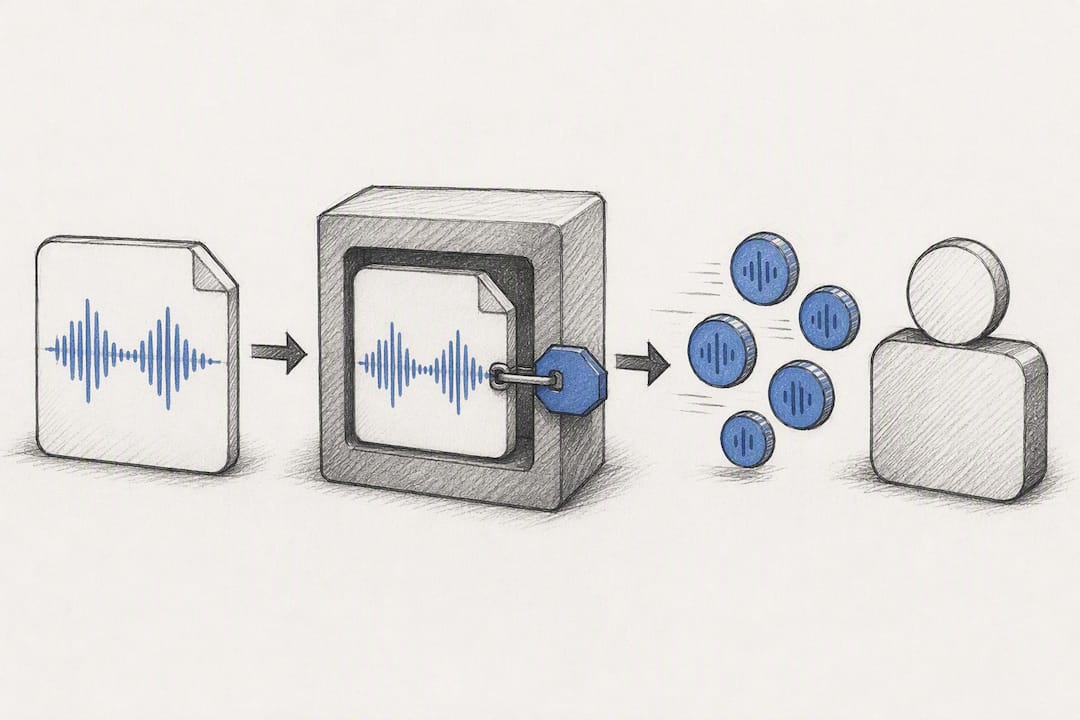
Opt-ins change coverage, too. DistroKid’s Social Media Pack extends monetization to user-generated uses beyond the standard audio library delivery, and DistroKid states it passes through 100% of what it receives from Bytedance’s audio library.
To confirm your delivery worked:
- Search your artist name and track title directly inside TikTok’s app.
- Confirm the sound shows up as a selectable audio clip, not just a video.
- Save your distributor’s delivery confirmation and ISRC for your records.
- Check that territory coverage matches where you expect plays to originate.
Pro Tip: Search for your track inside TikTok about two weeks after release. If it’s not there yet, don’t panic, delivery to TikTok’s library often lags behind Spotify and Apple Music by several days.
What Are TikTok’s Eligibility Thresholds and Payout Timelines?
Every gated program has a floor you need to clear before it pays anything. Creator Rewards commonly requires 10,000 followers and 100,000 views in the trailing 30 days, plus a minimum one-minute video length. LIVE gifts and Pulse carry their own thresholds and, in some cases, geographic restrictions that exclude entire regions.
Payout timing tests patience more than logic. Distributors typically report and pay on a monthly or quarterly cycle, and reporting itself often lags three to six months behind the actual plays. That gap is normal, not a sign something broke.
When money genuinely seems missing, the usual culprits are:
- Incorrect or missing ISRC metadata on the release
- Territory restrictions excluding where views actually happened
- The track never got delivered to TikTok’s library at all
- A user “original sound” upload instead of a distributor-tracked one
If you’ve ruled those out, open a missing-usage claim through your distributor’s support channel rather than TikTok directly. Distributors hold the delivery records TikTok needs to investigate.
Where to Focus for Real TikTok Music Profit Strategies
Rank your effort by actual return, not by what TikTok makes easiest to chase. Streaming uplift and direct sales outperform every native TikTok payout by a wide margin, which is why treating TikTok payments as a bonus rather than the goal is the smarter mental model for independent artists.
The priority order that makes sense for most catalogs:
- Streaming uplift: a viral sound drives listeners to save your full track on Spotify or Apple Music, where per-stream payouts compound over years.
- Direct sales and merch: fans who discover you on TikTok convert into buyers when you give them somewhere obvious to land.
- Sound royalties: steady but modest, and worth collecting properly rather than chasing aggressively.
- Creator Rewards: pursue only if you’re already producing longer-form content anyway.
- LIVE gifts and Pulse: treat as occasional upside, not a plan.
Tactically, that means building videos around a strong three-second hook, trimming your best minute-long section as the “hook clip,” and placing your streaming link somewhere a viewer can actually find it, your bio, your pinned comment, your video caption. Pre-save campaigns timed to a TikTok moment convert curiosity into stream counts before the algorithm moves on. A tool built for scripting short hooks can help you plan that opening moment instead of guessing at it video after video.
Pro Tip: Track click-throughs on your bio link, not just video views. A clip with 50,000 views and 500 link clicks is worth more to your business than one with 500,000 views and no clicks.
Setting Up Distribution, Opt-Ins, and Royalty Registration
Getting paid correctly comes down to a sequence, not a single decision. Skip a step and the money either doesn’t get tracked or takes months longer to reach you.
- Choose a distributor that explicitly lists TikTok delivery and Social Media Pack or CML support, such as DistroKid, CD Baby, or SoundOn.
- Confirm your release delivered successfully and double-check the ISRC assigned to it.
- Opt into the Social Media Pack or CML extra if your distributor offers one separately.
- Search TikTok’s app to verify your sound is live and selectable.
- Register your composition with a performing rights organization and with The MLC for US mechanical royalties.
- Log every ISRC and release date in a simple spreadsheet you control.
| Step | What it confirms |
|---|---|
| Delivery check | Track appears in TikTok’s audio library |
| ISRC verification | Usage gets attributed to you correctly |
| PRO and MLC registration | Publishing royalties get collected separately from master royalties |
| Statement review each period | Payments match expected usage volume |
Reconcile your recording statements and your publishing statements independently. Each tracks a different income stream on its own schedule, and conflating them is how artists miss discrepancies.
What Working Musicians Should Know Before They Chase Views
Independent artists building a real catalog treat TikTok as one input among several, not a standalone income plan. The pattern shows up consistently in how working musicians talk about their releases: the song that “did number” on TikTok rarely paid out much directly, but it moved units elsewhere.
The artists who make TikTok work for their business aren’t the ones with the biggest view counts. They’re the ones who built a clear path from that view to a stream, a sale, or an email address before the algorithm moved on to the next clip.
That mindset applies just as much to instrumental producers and beat makers building an audience around their sound as it does to vocalists chasing a hook.
The Discovery-First Mindset Behind TikTok Royalties
TikTok functions as a discovery engine first and a payment platform second, and confusing the two leads artists to overvalue view counts and undervalue conversion. Direct payouts matter when you’ve genuinely cleared program thresholds and built LIVE or Pulse activity into your routine, but for most catalogs they stay marginal next to streaming and direct sales. Measure what a video actually produced, link clicks, saves, pre-saves, not how many people scrolled past it.
— Thomas
Turn TikTok Views Into Real Sales With the Right Beat
Every artist chasing TikTok monetization eventually hits the same wall: the platform’s direct payouts are modest, and the real opportunity is turning a viral moment into a purchase, a stream, or a licensing deal you control outright. That’s where having a track built on a professionally produced beat with clean commercial rights changes the math.
Beats are available for instant download with licenses that include unlimited commercial rights, so there’s no waiting on approvals or negotiating usage terms after your clip starts moving. Whether you need a single track licensed for a release or a full beat pack to keep content flowing while a sound catches traction, the licensing is settled before you ever hit publish. If you’re building the kind of catalog that can actually capture TikTok-driven attention, browse the current beat selection and get your next release production-ready today.
Where to Verify Program Details and Payout Terms
Program rules shift, so confirm current terms directly with your distributor before assuming anything here still applies unchanged. DistroKid’s help center and CD Baby’s support pages walk through opt-in steps directly. Velveteen’s TikTok royalty guide and Orphiq’s monetization breakdown cover strategy and eligibility thresholds in more depth. Digital Music News tracks payout methodology changes as they happen.
This article is general information, not a substitute for advice from a qualified financial advisor. Consult a qualified financial professional about your own circumstances before acting on anything here.
Sources
- How Musicians Actually Make Money on TikTok in 2026 — Velveteen
- How TikTok Monetization Works — CD Baby Help Center
- Monetizing Your Music on TikTok — DistroKid Help Center
FAQ
How Much Does TikTok Pay for a Song?
TikTok doesn’t publish a fixed rate; payouts depend on your distributor’s deal and reporting. Industry estimates place blended sound royalties around $7 to $13 per million sound views, though your actual statement may differ.
Does TikTok Pay $1 per 1,000 Views?
No, that figure doesn’t match how TikTok music monetization works. Sound royalties get paid per video creation using your track, not per view, and blended industry estimates run closer to $7 to $13 per million views.
How Do You Make $1,000 a Month From TikTok as a Musician?
Direct TikTok payouts alone rarely reach that consistently for independent artists. Realistic paths combine sound royalty accumulation with converting TikTok traffic into streaming revenue, direct sales, and merch, which typically outearn any single native TikTok channel.
Do You Get Paid if People Use Your Music on TikTok?
You get paid only if your track was delivered through a licensed distributor with proper tracking, not if it exists solely as a user-uploaded “original sound.” Confirm your distributor has delivered the song to TikTok’s audio library and opted into any Social Media Pack or CML coverage available.

No Comments