


Songwriters: Finish Studio Ready Demos Writing to Type Beats in 8 Bars
Write to a type beat by listening for the vibe first, marking the bar grid, looping a short section, mapping where your syllables land, and writing the hook before anything else. Start with tap tempo and an 8-bar loop. Press play on the first 8 bars right now and count along. That’s the entire method, and everything below simply teaches you to do each step with intention.
TL;DR:
- Loop only 8 bars at a time during writing to maintain focus on rhythm and phrasing instead of rushing ahead to the next section.
- Matching lyric length and syllable count to the beat’s mood and tempo enhances delivery and prevents lines from fighting the instrumental.
- Using high-quality audio files, such as WAVs, improves syllable placement accuracy and makes detailed grid-based writing easier.
- Short, syncopated syllable placements on beats create a grounded or bouncy groove, while shifting placement can add urgency or tension.
- Finishing a song relies on simplifying crowded phrasing, recording scratch vocals early, and running through a clear checklist before final demos.
Table of Contents
- How to Write to Type Beats: A Step-by-Step Workflow
- Matching Lyrics to the Beat’s Mood and Pocket
- Setting Up Your Workspace: DAWs and Writing Apps
- Syllable Placement: Syncopation, Anticipation, and Double-Time
- Common Mistakes and a Finish Checklist
- Where Tellingbeatzz Fits Into Your Writing Session
- Three Habits Worth Adopting
- Try a Writing Session With Tellingbeatzz Beats
- Tools Worth Bookmarking
- Sources
How to Write to Type Beats: A Step-by-Step Workflow
Every strong record built on a type beat follows a version of the same sequence: listen, map, write, tighten. Skipping straight to lyrics is the single biggest reason writers stall out on an instrumental that felt perfect on the first listen. The beat has already made structural decisions for you. Your job is to find them before you write a single bar.
Here’s the full progression, from first play to a demo you can actually record.
-
Listen three or four times before touching a pen. Let the beat play through completely, then again, paying attention to where the energy lifts and drops. Absorb the mood, not the details. On the third or fourth pass, pick a topical angle that matches what the instrumental is telling you emotionally. A moody piano loop and a bouncy 808 pattern want completely different stories.
-
Find the BPM, key, and time signature. Tap along on four beats using your DAW’s tap-tempo function, or eyeball the waveform peaks in a tool that shows BPM directly. Once you know the tempo, set loop points around 8 to 16 bars. This becomes your workspace for the rest of the session.
-
Map the structure. Label what you’re hearing: verse section, hook section, any bridge or breakdown. Decide which section you’re writing first. Write the hook first whenever possible. Producers build type beats around a central hook idea, and reverse-engineering your lyrics from that hook keeps the whole song locked to the beat’s intent.
-
Build a syllable grid. Loop your chosen section and tap out where the strongest beats land, usually 1 and 3 in a standard 4/4 bar. Mark your preferred landing spots for stressed syllables. Community discussion on forums like r/makinghiphop consistently points to counting bars and fitting syllables inside them as the most reliable practical habit for beginners, ahead of any theory about flow.
-
Write the hook and melody, then build the verses around it. Iterate inside your small loop. Sing or rap phrases out loud before committing them to paper. Record scratch vocals as soon as a line feels right, even if the take is rough.
Pro Tip: Loop only 8 bars at a time during the writing phase. A shorter loop keeps your brain focused on rhythm and phrasing instead of drifting toward the next section before the current one is solid.
Matching Lyrics to the Beat’s Mood and Pocket
The words you choose need to sit inside the beat’s emotional register, not just its tempo. A dark, sparse type beat calls for shorter phrases with weight behind each word. A layered, melodic beat can carry denser, faster-moving lines because the instrumental gives your voice more room to move around inside it.
Line length and syllable count should scale with tempo. Slower beats reward multisyllabic rhyme schemes that let a listener sit with the wordplay. Faster or trap-influenced beats often work better with punchier, shorter bursts that land hard on the snare or hi-hat pattern. Internal rhyme and deliberate consonant choices help a line sit inside the pocket instead of fighting it. Swapping a soft word for a harder consonant at the end of a bar, for instance, can make a line snap where it previously sounded flat.
A few habits worth building into every writing session:
- Read your topic choice against the beat’s instrumentation before writing a single bar.
- Count syllables per line and adjust for tempo rather than forcing a scheme that worked on a different beat.
- Use internal rhyme sparingly. Overloading a line with rhyme often kills its rhythm.
- Apply an 80/20 rule in early drafts: spend 80% of your time on the hook and melody, 20% on polishing secondary lines.
That last point matters more than most new writers realize. A polished verse attached to a forgettable hook rarely survives past the demo stage.
Setting Up Your Workspace: DAWs and Writing Apps
You do not need an expensive studio to write to a type beat well. You need software that lets you import audio, loop it precisely, and either write alongside it or capture a scratch vocal fast.
GarageBand is the easiest entry point for Mac users. Import your beat, match your project tempo to it, create an audio track, and set a loop region around your working section. It handles basic recording well enough for a demo take.
Audacity covers the same ground for free on any platform, with straightforward import and looping, though its editing tools are more basic than a full DAW and better suited to quick demos than final mixes.
For the writing itself, dedicated apps solve a real problem: switching between a lyric notebook and a beat player breaks concentration. Lyrist keeps the beat playing on the same screen as your lyrics and includes a rhyme lookup feature. WriteToTheBeat, also known as FLOWRITE, goes further with a grid interface for tapping tempo and marking exact syllable landing points against a bar grid.
- GarageBand: best for Mac users who want to record a real demo in the same session.
- Audacity: best free option for quick imports and looping across any operating system.
- Lyrist: best when you want lyrics and beat visible together with rhyme suggestions on tap.
- WriteToTheBeat: best for visual syllable mapping against a precise bar grid.
Clearer audio makes syllable placement noticeably easier. Writers working from a full WAV file catch transients and attack more precisely than they would from a heavily compressed MP3, which is one reason grid-based writing apps recommend higher-quality files for anyone doing detailed syllable work.
Syllable Placement: Syncopation, Anticipation, and Double-Time
Groove comes from where you place syllables relative to the beat, not from how clever the words are. In a standard 4/4 bar, syllables landing squarely on 1 and 3 feel grounded and steady. Shifting your strongest syllables to 2 and 4 instead gives a line a bouncier, more syncopated feel that plays well against a hi-hat-driven beat.
Syncopation and anticipation are your two main levers for pushing against the beat’s natural pulse. Anticipating a strong syllable slightly ahead of the beat creates urgency. Delaying it creates tension that resolves when the word finally lands. Try rewriting a flat line by moving its key word half a beat earlier or later and listen to how the whole bar changes character.
Triplet patterns and double-time delivery change rhyme density dramatically. Triplets let you fit three syllables where a straight rhythm fits two, which is useful for a rapid-fire section, but overusing them across an entire verse gets exhausting for a listener. Double-time sections work best in short bursts, often right before a hook, where the increased density signals a shift in energy.
- Loop two bars only and try three different syllable placements to hear the difference immediately.
- Push strong syllables ahead of the beat for urgency; pull them behind for weight.
- Save triplets and double-time for accents, not full verses.
Pro Tip: If a line feels clunky, don’t rewrite the words first. Try shifting the syllable placement by a half beat before you change a single word. The problem is often rhythm, not vocabulary.
Common Mistakes and a Finish Checklist
Most unfinished demos stall for the same handful of reasons. Overcrowding the beat with too many syllables is the most common: writers pack every available beat with a word and leave the instrumental no room to breathe. Mismatched mood is the second, where a party topic gets written over a somber, minor-key beat because the writer picked a theme before actually listening. Inconsistent syllable counts across verses is the third, making the second verse feel rushed or stretched compared to the first.
The fixes are usually fast. Simplify phrasing where a line feels crowded. Reduce rhyme density if a verse sounds like it’s trying too hard. Re-loop a smaller section, sometimes just two bars, when you’re stuck. Adjust your vocal delivery before rewriting lyrics entirely; a timing problem often isn’t a writing problem.
Before calling a demo finished, run it against this checklist:
- A hook that’s solid enough to repeat without getting tired of it.
- Two full verses, or one verse plus an extended hook if the beat calls for it.
- Scratch vocals recorded, even roughly, over the full arrangement.
- Stems or sections labeled clearly for whoever mixes next.
- A short note on delivery or mix intent for future reference.
Get outside feedback once the checklist is complete, not before. Iterating endlessly without ever recording a full pass usually kills momentum on a strong idea.
Where Tellingbeatzz Fits Into Your Writing Session
Licensing confusion stops more writers from finishing and releasing music than any rhythm problem ever will. Some beat marketplaces remove that friction with catalogs of instrumentals and buildable beat pack systems, letting artists secure unlimited commercial rights before they’ve written a single bar.
That clarity matters at the writing stage, not just the release stage. Knowing your rights are settled means you can write, record, and release without wondering later whether a beat license covers where you’re planning to put the song.
| What you get | Why it matters while writing |
|---|---|
| premium instrumentals | More options to match mood and tempo before you commit to a topic |
| Buildable custom beat packs | Practice across genres without repeat licensing hassle |
| WAV and trackout file options | Cleaner transients for precise syllable placement |
| Unlimited commercial rights | Write and release without legal ambiguity later |
A practical habit: download a beat in WAV format before a writing session starts. The clearer file makes your syllable grid work in the earlier steps noticeably easier to execute.
Three Habits Worth Adopting
The workflow above works. What separates a writer who finishes songs from one who has forty unfinished voice memos usually comes down to a few small habits, not talent.
Loop fewer bars than feels natural, and write the hook before anything else. Record scratch vocals the moment a line feels right, even if the take is imperfect. It captures a feel you often can’t recreate later once the pen work sets in. Keep a lightweight app open for rhyme lookup while the real recording happens in the DAW, so you’re never switching context mid-idea. My own routine on a new beat: three listens, an 8-bar loop, hook first, scratch vocal within the first ten minutes.
— Thomas
Try a Writing Session With Tellingbeatzz Beats
Some platforms give you a faster path to a finished demo than hunting across scattered free-beat channels for something that fits your sound. These services may offer hundreds of instrumentals spanning hip-hop, rap, R&B, and soul, flexible licensing including WAV and trackout files, and licenses with unlimited commercial rights, so you can move from browsing to writing in one sitting, without legal ambiguity later.
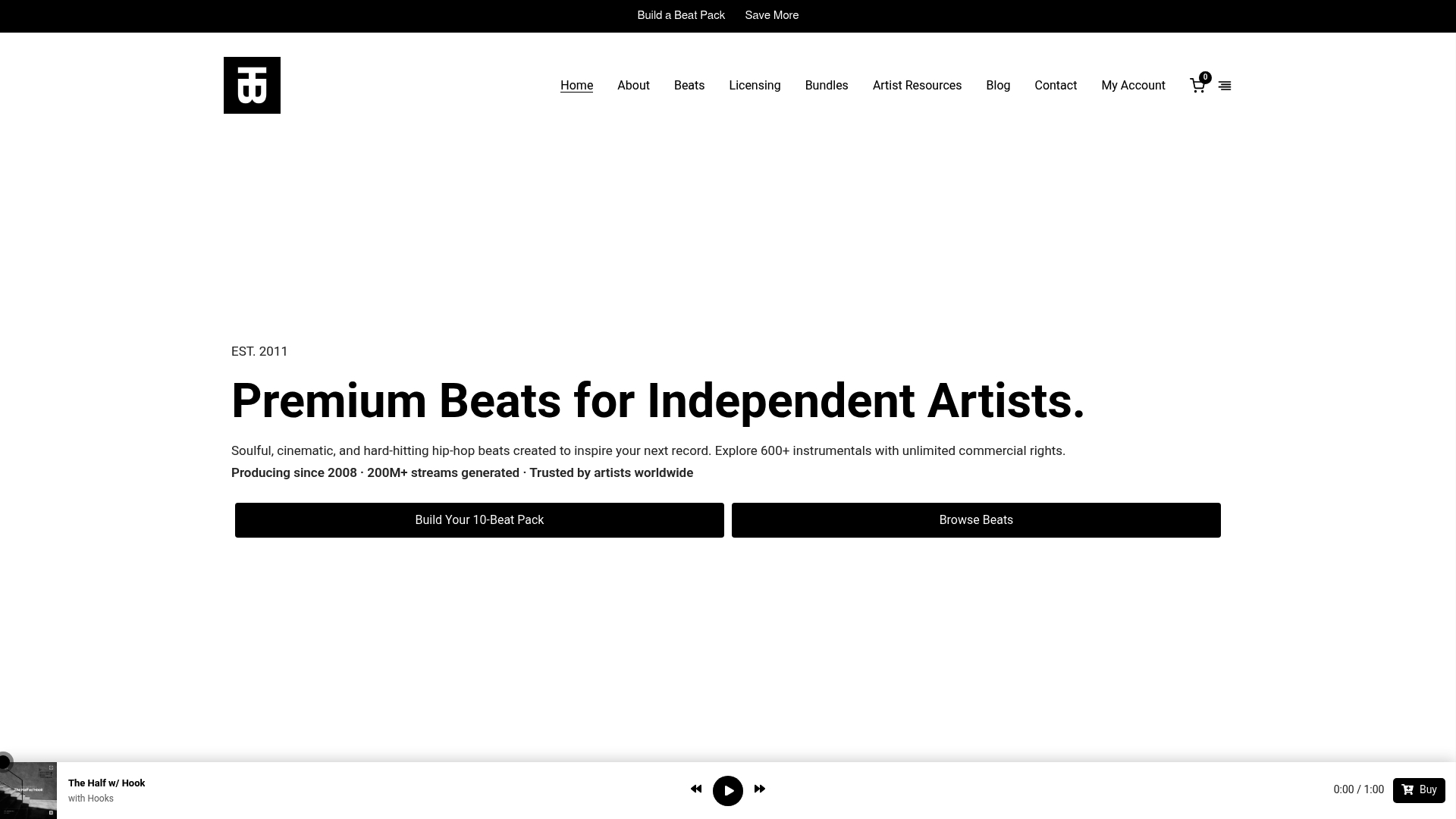
Running a session is simple. Pick a mood or genre that matches the story you want to tell. Download the WAV file so your transients stay sharp for syllable placement. Then loop the first 8 bars and start writing your hook. If the process in this article clicked for you, browse the Tellingbeatzz catalog and find the instrumental that fits your next record.
Tools Worth Bookmarking
A short list of the software referenced throughout this workflow, kept practical and easy to revisit:
- GarageBand: free DAW for Mac users, good for import and basic recording.
- Audacity: free, cross-platform option for quick looping and imports.
- Lyrist: writing app with beat playback and rhyme lookup on one screen.
- FLOWRITE / WriteToTheBeat: grid-based syllable mapping against a bar grid.
- Free: generates royalty-free practice instrumentals by genre and BPM.
- Tellingbeatzz: licensed beats with unlimited commercial rights for finished releases.
No Comments